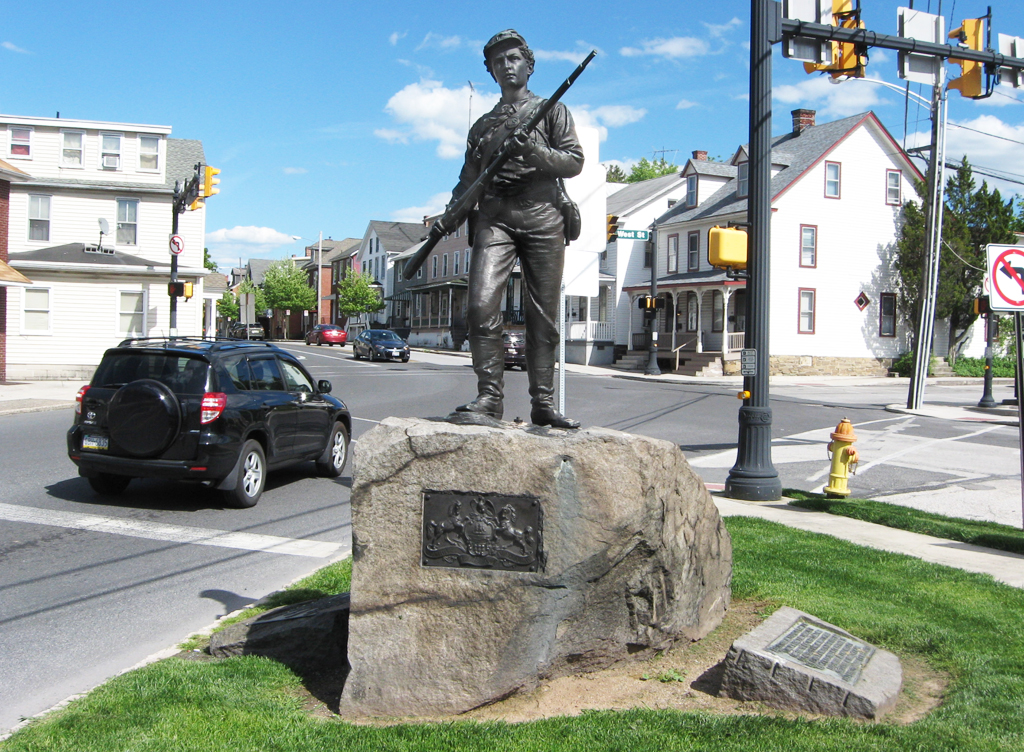
“For love, money, or marbles”, the Great Hound Match of 1905

It started with a feud in the paper and two Masters of Foxhounds from Massachusetts. Harry Worcester Smith, MFH Grafton Hunt, wrote in Rider and Driver that the American foxhound should be a recognized breed, separate from British bred foxhounds. Meanwhile Alexander Henry Higginson, MFH Middlesex Hunt, insisted that there was no such thing as an “American” breed, and that if there were, British foxhounds were still superior. A challenge was proposed. Smith was to gather hounds, Higginson would do the same and the packs would duke it out “for love, money, or marbles”, according to Higginson. The goal was simple: the pack that best caught foxes would be the winner. These Massachusetts Masters of Foxhounds decided that Middleburg, Virginia, would be the battleground on which the Great Hound Match would take place, and November 1 would be the first day of reckoning.

The Middleburg and Upperville areas were used to being contested territory. During the Civil War, the Virginia Piedmont Heritage Area was a borderland where armies skirmished and partisan rangers prowled. Most residents had at least one family member who had drawn arms in support of the Confederacy barely a generation ago. But newly arrived Northerners found they had a stake in history of the area too. On July 17, 1863 during the Battle of Aldie, Major Henry Lee Higginson, 1st Massachusetts cavalry, was knocked from the saddle, slashed with a saber, and shot twice. The elder Higginson survived the ordeal to become a successful broker, founder of the Boston Symphony Orchestra, and sometime advisor to President Woodrow Wilson. Forty-two years after Higginson’s wounding at Aldie, his son Alexander Henry Higginson returned for a friendly competition in what used to be dangerous rebel territory.

It was no surprise that the Loudoun Valley was chosen as the site for the Great Hound Match. Foxhunting had taken place in the area for nearly 150 years, and it was home to the United States’ oldest hunt club, the Piedmont Fox Hounds, founded in 1840 by Col. Richard Henry Dulany. In fact, the first day’s hunt began at the Colonel’s home, Welbourne, and was dedicated to the 85-year-old hunt progenitor. Dulany’s nephew, Henry Rozier Dulany, Jr., hosted Harry Worcester Smith and the Grafton hounds at Oakley near Upperville. Throughout the Great Hound Match, the field was dotted with equestrians from home and abroad, indeed, participants from 26 hunts joined in on the fun, including one hunt each from Canada, England, and Ireland. Northern Virginia’s rolling hills and rural pastures were (and still are) strikingly similar to traditional hunt country in Leicestershire, England, but the bucolic setting belies surprisingly deep creeks and steep cliffs. It is exactly the right setting for a grand drama on horseback, and that’s just what unfolded in November of 1905 as riders, whippers-in, hounds, reporters, grooms, and over 100 horses descended on the little train station in The Plains.

This undated photo of Welbourne was sent to Harry Worcester Smith, courtesy of NSLM

Far from the glitzy hotels and sparkling nightlife of New York City, Boston, and Washington, D.C., visiting equestrians hacked back and forth to Hound Match meets on dirt roads often mired in mud and farm traffic. Higginson’s British hounds from the Middlesex Hunt proved to be most popular during the Match, often drawing a field of 50 or more. Onlookers praised the foreign-born hounds’ cohesiveness, and while the hounds traveled fast, nearly everyone could keep up. Higginson was wont to meet in Middleburg and cast his hounds north of town towards the Fred Farm or at Lemmon’s Bottom just across the Goose Creek Bridge. In comparison, Harry Worcester Smith’s Grafton hounds often met at Oakley but would then gallop across the territory, from Upperville to Unison to Oatlands and back in one morning. On November 9th they met at Zulla and were headed to The Plains when the Grafton hounds ran head-first into the Orange County Hounds, who were out that morning with MFH John Townsend. The OCH was founded in Goshen NY in 1900 and only started hunting in Virginia in 1903. It was only a matter of time before all the Northerners started bumping into each other! Throughout the Match, the Grafton hounds went fast. A field that might start with 20-30 riders sometimes ended with barely a third of that number, and twice the hounds were separated from Smith and had to be rounded up hours later. Among the stalwart hunters who managed to keep up with the hounds were a handful of young riders, and usually a Mrs. Tom Peirce from Boston who rode aside. Flocks of locals followed the match on horseback, hilltopping at key vantage points to see the hunt field surge past in pursuit of the wily Reynard. While hunting near the Fletcher farm, Smith called out to a rider who was trampling through a farmer’s field of winter wheat. Smith demanded that the “son-of-a-bitch” stop destroying the delicate crop, to which the rider responded it was his wheat and he’d ride over it if he pleased.
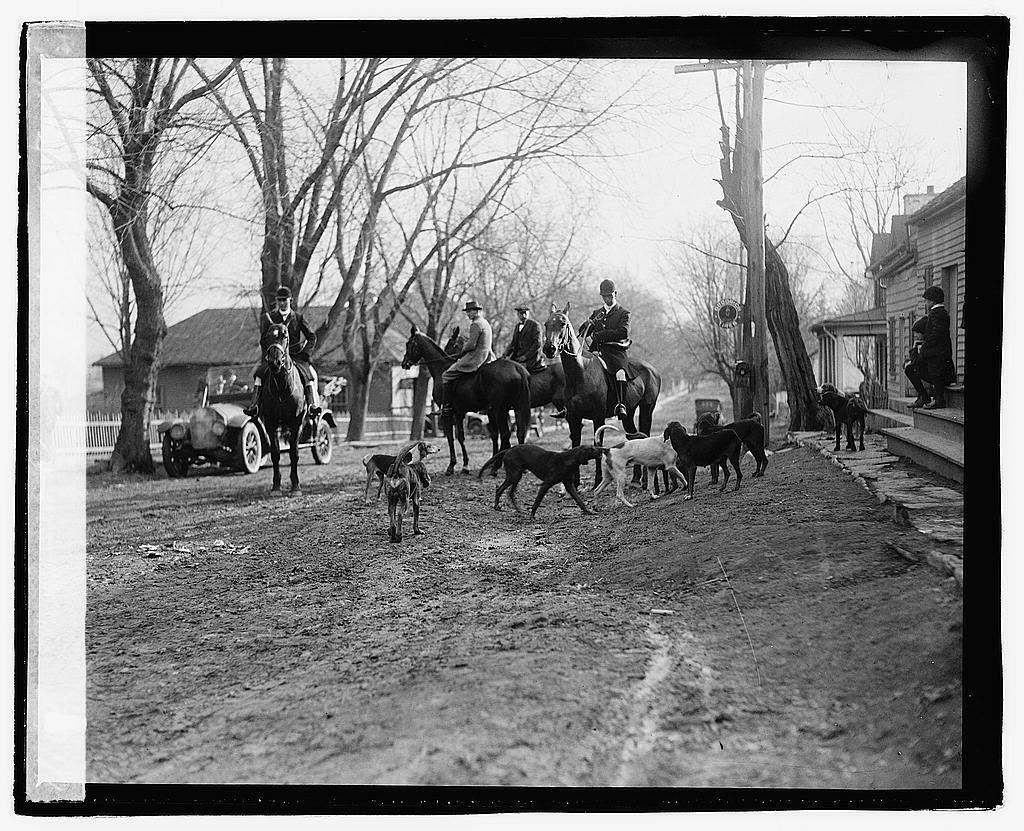
Piedmont Foxhounds in Upperville, 1921. Note that even the Ashby’s Gap Turnpike (Rt 50 today) is unpaved

The Piedmont landscape took a toll on even the most experienced riders. Frederick Okie of Piedmont Stock Farm nearly drowned in Pantherskin creek when he and his horse stumbled into a deep pool while chasing after the Middlesex hounds. That same day Harry Worcester Smith managed to break his foot and had to be cut out of his riding boot by Upperville physician Charles Rinker. Julian Ingersoll Chamberlain, who served in the New York cavalry during the Spanish American War, was not the only rider to go head over bridle while jumping over stone and barbed wire fencing. And the risks were not only physical. Higginson and a large number of his followers were arrested by Fauquier resident Amos Payne for trespassing in a wheat field. Payne insisted that all he wanted was a promise that the trespass wouldn’t be repeated, but the magistrate got involved and the situation was only cleared up with the intervention of Richard Henry Dulany, who didn’t want to jeopardize the area’s reputation to visitors.

Active Virginia hunts c. 1938. Photo courtesy of NSLM

The Great Hound Match lasted from November 1-14, with either the Middlesex or Grafton hounds running every single day except Sundays. Despite many chased foxes, no wild foxes were killed during the Match, leading some to speculate that it would result in a draw. However, in the end it was decided that Smith’s American hounds had performed better overall. Higginson accepted defeat with grace, and even his most ardent supporters admitted that they were impressed by the performance of the longer-legged contestants. Though the match was over, both Higginson and Smith had long careers in foxhunting ahead of them. The camaraderie inspired by the Match led to the formation of the Masters of Foxhounds Association of North America in 1907 with – who else?- Harry Worcester Smith as its first President. Alexander Henry Higginson was next to serve at the helm. Today MFHA headquarters are in Middleburg, Virginia. While hunt territory across the United States has been disappearing since the 1950’s due to suburban sprawl and new pastimes, open landscape and preservation have kept the sport alive in Virginia. The Old Dominion is still host to 24 active hunts, seven of which are in the Virginia Piedmont Heritage Area.

Special thanks to Erica Libhart, Mars Technical Services Librarian at the National Sporting Library & Museum, for access to the Harry Worcester Smith archive. For a thorough retelling of the Great Hound Match of 1905, check out Martha Wolfe’s book on the subject. For more about Harry Worcester Smith and his prodigious archives, make a research appointment with the National Sporting Library & Museum.

In the Wake of Antietam

Last week marked the anniversary of the Battle of Antietam. In a single day over 20,000 men were killed, wounded, or went missing. It was the bloodiest day of the bloodiest war in American history. Lee had lost a large part of his Army of Northern Virginia, but managed to escape back across the Potomac to the relative safety of the Shenandoah Valley. Despite driving Lee out of Maryland, the Army of the Potomac under George McClellan failed to follow up with a decisive victory. In the days and weeks that followed the two battered armies took time to regroup and reorganize for the next campaign.

McClellan’s inaction through late September and early October was a source of great annoyance for President Lincoln and other members of the Union war department. General-in-Chief Henry Hallack wrote that “The long inactivity of so large an army in the face of a defeated foe, and during the most favorable season for rapid movements and a vigorous campaign, was a matter of great disappointment and regret.” For his part, McClellan countered that he desperately needed equipment and feared overextending his bloodied army. It wasn’t until October 26th that the Army of Potomac lurched into motion. Long lines of soldiers, artillery, and wagons moved across the Potomac at Berlin (modern Brunswick, Maryland) and into Loudoun County. The coming campaign would take them straight into the heart of the Heritage Area.

Pontoon bridges across the Potomac at Berlin, looking towards Virginia.

The bulk of Lee’s army was resting in the Shenandoah Valley, near Winchester when reports of the Union advance reached him. Fearful that a rapid movement might cut him off from Richmond, Lee rushed to get his troops out of the Shenandoah and east of the Blue Ridge. To delay the US forces as long as possible he called on his cavalry commander, JEB Stuart, to ride into the Loudoun Valley. The Confederate cavalry crossed the mountains on October 30th and prepared to fight.

Skirmishing between US and Confederate cavalry began the next day in the vicinity of Mountville and Aldie, as Stuart’s troopers drove the blue clad horsemen back. Fighting continued the next day near the village of Philomont. Men of the 8th Pennsylvania Cavalry were ambushed while crossing a ford across the frigid North Fork west of town. Soon reinforcements were pouring in on both sides, and for several hours the action raged back and forth. The fighting only dies down as the sun began to set, and the Confederates withdrew west towards the village of Unison.

Beaverdam Ford on modern JEB Stuart Road, site of the fighting on November 1.

Reinforced by infantry, the Union force continued their advance early on November 2nd. The band of the 6th US Cavalry played “Listen to the Mockingbird” as the men moved south in the direction of Unison. The pleasant morning was interrupted as they reached Dog Branch. Confederate troops controlled the ford across the stream, much as they had the previous day. The Union commander, Alfred Pleasanton, used his infantry to pin down the Confederate defenders, while his cavalry fanned out along the nearby roads and tried to flank the rebels. Outmaneuvered and outnumbered, the Confederates fell back to the outskirts of Unison.

JEB Stuart deployed nearly 600 men and six artillery pieces on a line through the village, intending to delay the US troops as long as possible. The open ground east of the village gave them a perfect field of fire as the Union force came into view. Soon the artillery opened up from the high ground near the Methodist Church. Federal guns replied in kind, and an artillery duel continued for an hour. Caught between the guns were the citizens of Unison who cowered in their cellars as the shells flew overhead.

The Unison Methodist Church, near the site of the Confederate artillery position.

The artillery fire did little to slow the Union advance, however, and within an hour Stuart pulled his men back once again. The next line of resistance was located on the high ground near the South Fork Quaker Meeting House and cemetery. Troops from both sides used the area’s numerous stone walls for cover, and Stuart later wrote that they “afforded the enemy as good shelter as ourselves.” By 2:00 PM, US infantry drove the rebels from the meeting house and on to Beaverdam Creek. Skirmishing through the wooded and broken ground continued throughout the afternoon, as the Confederates retreated past Welbourne and Crednal.

Fighting erupted again on the morning of the 3rd, as Stuart made his stand along Pantherskin Creek north of Upperville. Union forces advanced along Trappe, Green Garden, and Willisville Roads in an attempt to drive off the rebels. As the day wore on the Confederate line collapsed and fell back westward towards Ashby’s Gap. As they did they passed by Oakley, home of diarist Ida Dulany. She recorded the events of the 3rd in her diary, writing “For about an hour we watched the battery pouring out shells against our battery, which was planted in the vineyard. The shells from both batteries burst in full sight of us, frightening the servants nearly to death.”

Ida Powell Dulany, who recorded the fighting in her diary.

Although the Loudoun Valley Campaign and the Battle of Unison are often overlooked, the desperate skirmishing that took place would have an immense impact on the war. By the end of November 3rd, JEB Stuart and his men had been driven from the Loudoun Valley, but they had accomplished their mission. For three days they held up the Union advance, backing up the roads of Loudoun County with tens of thousands of soldiers and slowing McClellan to a crawl. Lee was able to move his infantry out of the Shenandoah Valley and in place to defend Richmond. The killing blow that Lincoln had hoped for was doomed.

The Loudoun Valley Campaign would prove to be the last for George McClellan. Frustrated by another blown opportunity, Lincoln decided to act. Late on the night of November 6-7th a courier from the War Department arrived at McClellan’s headquarters tent outside of Rectortown. He carried a copy of General Orders No. 182, stating:

By direction of the President of the United States, it is ordered that Major- General McClellan be relieved from the command of the Army of the Potomac, and that Major-General Burnside take the command of that army. By order of the Secretary of War.

Many of the sites where the fighting occurred that fall are much as they would have been over 150 years ago. The road network around Unison is largely unpaved, giving the modern traveler a way to experience the area as the soldiers did. The Virginia Piedmont Heritage Area also works to encourage preservation of the battlefield landscape through the The Bondi Family Land Conservation and Battlefield Preservation Fund, which helps cover administrative costs for landowners looking to place battlefield land in the Unison area in permanent conservation easements.

Crednal, “a small brick house with a yard”

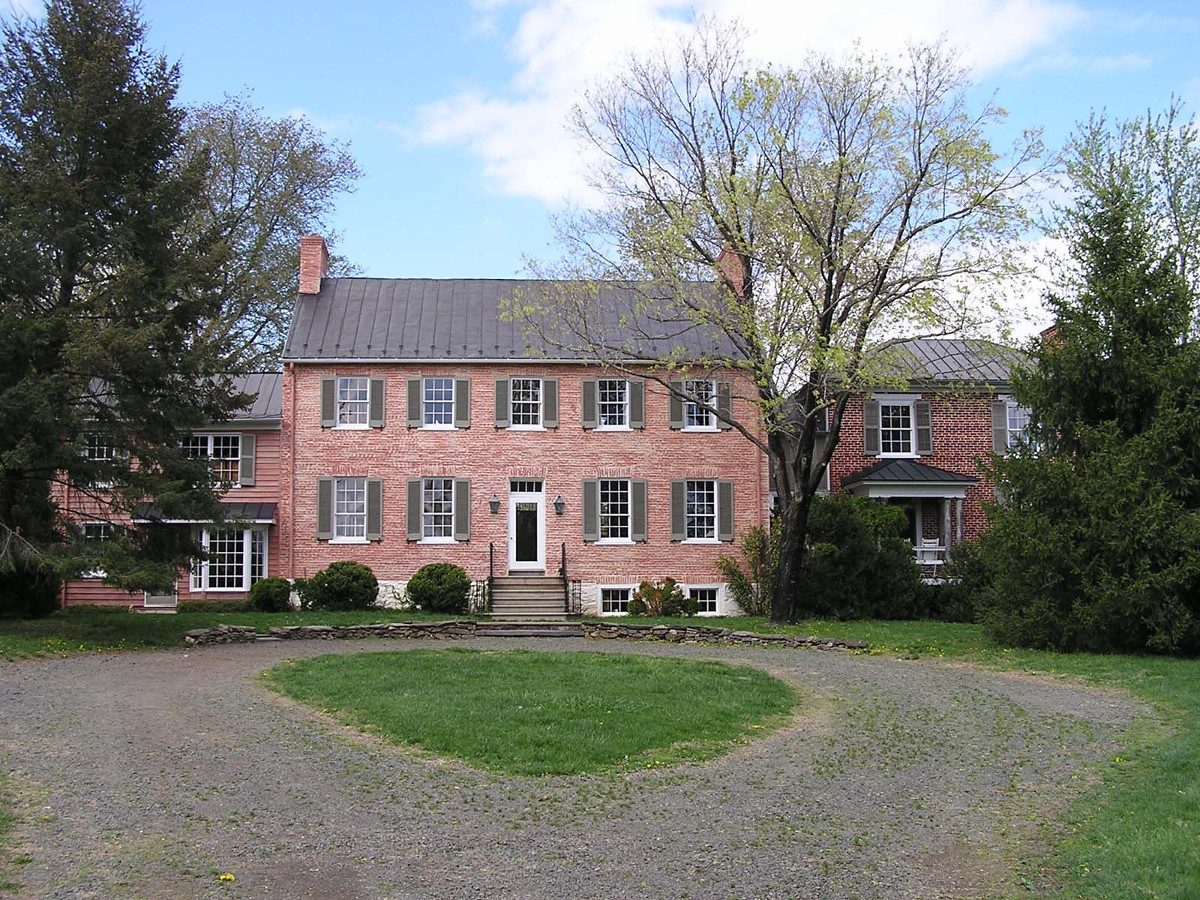
Completed by 1820, the DeButts’ 5 bay brick mansion became the home of Virginia statesman John Armistead Carter and his son, cavalry commander Richard Welby Carter. The legacy of this estate was made during the antebellum years and the Civil War, but it endures in communities across the Virginia Piedmont Heritage Area, including the historically black villages of St. Louis and Willisville.

The property now called Crednal, and long associated with the Carter family, has its beginnings in the 18th century as a tenant farm owned by Benjamin Tasker Dulany, Jr. Like many tracts in southwestern Loudoun, it was leased to a farmer who improved the plot using forced labor. By 1785 about a dozen enslaved workers were at the property, owned and overseen by a white man living in a small, one and a half story stone residence. A generation later, Richard Welby DeButts and his wife Louisa Dulany expanded the residence to the brick edifice we see today. A sizable and well-furnished home on some 1,000 acres, a wealthy Tidewater visitor rather dismissively described it as ‘a small brick home with a yard’ when he came to the area in 1866.

Crednal as it appears today, with later additions flanking the c. 1820 home

Richard Welby died a few years into his marriage to Louisa Dulany, who then lived in the home with her second husband, Edward Hall, and their children from both marriages. Richardetta DeButts, daughter of Louisa and Richard, married Virginia statesman and Fauquier resident John Armistead Carter in 1834. They probably moved into the home around 1845, and the estate was likely named ‘Crednal’ during this time. The name is an homage to the Carter roots in Credenhill, Herefordshire, England. John Armistead Carter is perhaps best known as one of Loudoun’s two delegates to the 1861 Virginia Secession Convention in Richmond, alongside Convention President and Leesburg resident, John Janney. Carter was steadfast in his refusal to vote for secession. A lawyer and former member of the state legislature, Carter believed that states did not have the authority to secede from the union. Still, as a Virginia native and an enslaver, Carter supported the Confederate cause during the Civil War.

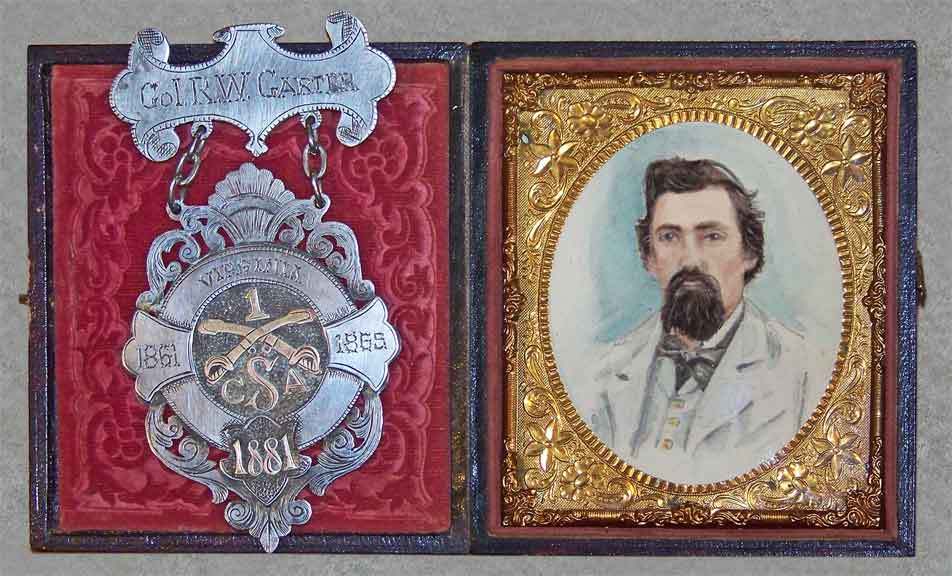
An 1881 commemorative medal and miniature watercolor of Richard Welby Carter. Possibly a gift from his wife Sophie for the 1881 reunion in Luray, Virginia

Carter’s VMI graduate son, Richard Welby Carter, organized a cavalry company in Spring 1861, which became Company H of the 1st VA Cavalry. The young Carter was already an accomplished horseman, having won a number of the prizes at his cousin R H Dulany’s inaugural Union Colt & Horse Show in 1853 (later renamed the Upperville Colt & Horse Show.) Carter served throughout the war, having a horse shot out from under him, being imprisoned multiple times, and rising to the rank of Colonel. Crednal itself saw action during the war, notably during 1862’s Battle of Unison, and 1863’s Battles of Aldie, Middleburg, and Upperville. The Civil War’s most lasting scars are evidenced by what we don’t see at Crednal. In December 1864 General Wesley Merritt’s infamous Burning Raid claimed mills, barns, stables, corn cribs, and fields across Loudoun Valley. Determined to smoke out Mosby’s Rangers and destroy the livelihood and morale of the residents, the raid is most likely responsible for the destruction of the antebellum outbuildings.

One remaining feature is the Carter family cemetery, which includes the graves of John Armistead Carter, Richardetta DeButts Carter, and several others. The enslaved cemetery lies about 50 yards away.

There are, however, other important hallmarks of Crednal’s past and its dissolution as a plantation following the Civil War. In 1860, John Armistead Carter is listed as owning 26 enslaved people at Crednal, most of whom were probably field hands. Together with the enslaved populations of nearby Welbourne and Catesby, about 100 people lived in bondage in the immediate area. These families were as intertwined as the Dulanys, Carters, and DeButts were. They knew the landscape, they survived the clash of warring nations, and on the other side of war they began to build anew.

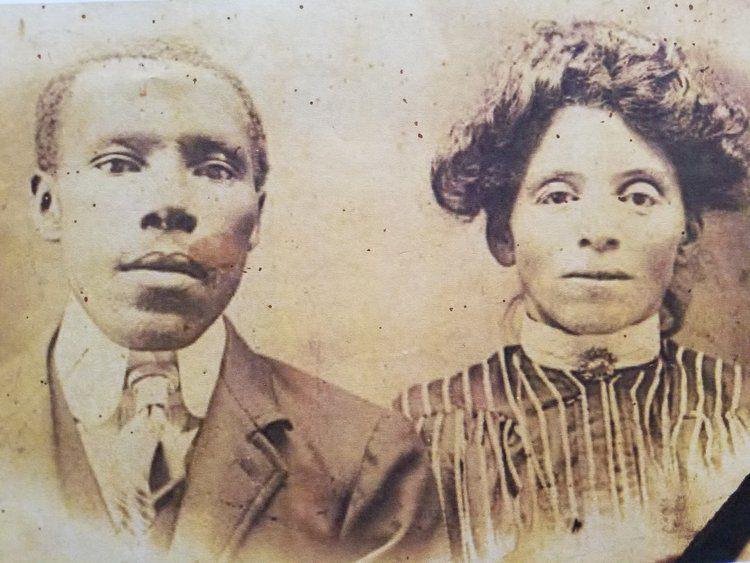
Willisville residents Adolphus Hampton (1860-1912) and his wife Mary Florence Jackson Hampton (1869-1929)

The Jackson and Evans families bought small acreage to the west of Crednal alongside Henson and Lucinda Willis, ‘near Clifton.’ The community, which named itself Willisville, asked John Armistead Carter for support to build the 1868 schoolhouse. George Evans was the village’s first pastor. His wife Julia was likely born at Crednal and was buried there as well. While she was born into slavery, she was buried a free woman. Hers is the only carved headstone in the enslaved cemetery. To the east of Crednal, St. Louis boasted 14 families, many formerly living in slave quarters on nearby plantations. Though modest, these villages show the prosperity and opportunity of postwar life. Both Willisville and St. Louis are active communities to this day and are well worth a visit.

“With the prisoners at the top of the mountain at Ashby’s Gap”

On the morning of October 17, 1781 the unthinkable happened. A drummer appeared on the British entrenchments at Yorktown, followed closely by an officer carrying a white handkerchief. Their appearance marked the end of the Siege of Yorktown, and in many ways, the end of the War for Independence. Although sporadic fighting would continue until the Treaty of Paris was adopted two years later, the Franco-American victory at Yorktown marked the end of major campaigning in North America and the de facto recognition of American independence. It also marked the beginning of a major problem for George Washington – what to do with thousands of prisoners?

The Surrender at Yorktown by Louis-Nicolas van Blarenberghe

In the aftermath of Yorktown, over 7,000 British, German, and American Loyalists were now prisoners of the Continental Army. This number was roughly equal to the number of men under Washington’s command, and it was essential to move them away from the coast and any potential British rescue. It was also necessary to move them to the interior of the continent in order to find a place untouched by the war, where food and shelter could be obtained. Throughout the war towns like York, Pennsylvania; Frederick, Maryland; and Winchester and Charlottesville, Virginia were used to house increasing numbers of prisoners. Even smaller inland towns, such as Leesburg, had seen groups of British and German soldiers from time to time.

Camp Security, outside of Charlottesville, was typical of a POW camp in the American backcountry.

Now, faced with a massive number of captured men and officers to house, Washington chose to split the prisoners into two groups. The first was bound for Winchester, the second for Fort Frederick, a disused French and Indian War-era fort near Hancock, Maryland. On October 25th he wrote his Commissary for Prisoners Abraham Skinner the following letter outlining the numbers of prisoners, their regiments, and their destinations:

To the Commissary General of Prisoners
Camp near York 25th Octr 1781

Winchester
Artillery 193
Guards 467
23d Regiment 205
43d Do 307
76 Do 625
2 Battalions of Anspach 948
Queens Rangers 248
Pioneers 33
3029

Fort Frederick
Light Infantry 594
17th Regiment 205
33d Do 225
71st Do 242
80th Do 588
Prince Hereditory 425
Regt De Bosc 271
Yagers 68
British Legion 192
North Carolina Volunteers 114
2924

You are to dispose of the Prisoners as above.
G. Washington

Now that the arrangements were made, the question became how to get the prisoners to their destinations. Rations and other supplies needed to be collected and a route of march needed to be planned out. For security, Washington called upon a number of Virginia militia companies to act as guards, including several from the Heritage Area. Until 1781, the Revolutionary War was fought largely outside of Virginia, and as a result the militia of the northern Piedmont had seen relatively little combat. Local companies called out to assist the army at Yorktown, especially those of Fauquier County, were chosen to escort the prisoners northward.

The long march began on October 21st. The column stretched out for miles along the road from Yorktown, as soldiers, officers, livestock, wagons, and women and children clogged the route. The militia division marched at the head, with guards scattered about the length. It would take the slow moving mass over a week to reach the Rappahannock River at Falmouth. Near constant rain and dropping temperatures slowed progress further. One British officer noted with some humor that the Piedmont men guarding the column seemed to have little love for their tidewater countrymen:

our guards were all from the upper parts of the state, called backwoodsmen, between whom and the inhabitants of the lower parts there existed no cordiality; and at night when we halted, they not only allowed but even encouraged our men to pull down and make fires of the fence-rails…when the proprietor complained, they only laughed at him

Samuel Graham, 76th Highland Regiment

The prisoners continued northward on the road and into Prince William County, resting briefly near Dumfries. On November 2nd they reached Fairfax Courthouse. Here the prisoners were split into two groups, as outlined by Washington’s instructions. The Maryland-bound prisoners moved northwest into Loudoun County. Marching through Leesburg and turning up the Carolina Road, they crossed the Potomac at Noland’s Ferry, where they were handed over to Maryland militia to continue their journey to Fort Frederick.

Nolands Ferry, where the north-bound prisoners crossed the Potomac into Maryland.

The remaining prisoners, numbering around 3,000, turned westward along the old colonial road to Ashby’s Gap. Decades later the road would become known as the Ashby’s Gap Turnpike, and it is now traced by US Route 50, but in the 1780s it was a muddy wagon road that followed an ancient Native American path. The prisoners trudged on through the increasingly cold weather. They forded Goose Creek just downstream from the current location of the Goose Creek Bridge, and the Blue Ridge Mountains loomed closer and closer each day.

Looking east into Fauquier County from Ashby’s Gap. The view is remarkably similar today to what the marchers would have seen as they took one last look back before crossing the mountain.

The footsore and bedraggled column reached the foot of Ashby’s Gap on the morning of Sunday, November 4th. While the men began the steep ascent up the mountain pass, several officers gathered for a meal at Ashby’s Tavern in the village of Paris. Samuel Graham, a Scottish officer in the 76th Highlanders, recounted his encounter with the landlady many years later:

I asked Mrs. Ashley [Ashby] if she could give two or three of us anything to eat. She stared at my uniform, saying — ” A militiaman, I guess.” ” No,” was my reply. ” Continental, mayhap” to which I also replied in the negative. “Ho!” said she, ” I see you are one of the sarpints [serpents], one of ould Wallace’s [Cornwallis’s] men; well now, I have two sons, one was at the catching of Johnny Burgoyne,
and the other at that of you ; and next year they are both going to catch Clinton at New York; but you shall be treated kindly, my mother came from the ould country.”

Samuel Graham, 76th Highland Regiment
Ashby Tavern in the early 20th century. Sadly, the building was destroyed by a runaway truck in the 1930s.

It would take the prisoners most of the day to make the laborious climb up and over the Blue Ridge. Their discomfort grew when they crossed the frigid and waist deep waters of the Shenandoah near sunset. Many men lost their footing and were dunked in the cold and swirling waters.

Late in the next day the prisoners finally arrived on the outskirts of Winchester. It was a journey of sixteen days and over 240 miles. With the prisoners secured it was time for the Fauquier militia to return to their homes. A number of militiamen would recount their experience decades later as they applied for their military pensions. Spencer Withers of Warrenton was one of those men. In August 1832 he went before the Fauquier County court to testify to his military service. He claimed service in the Carolinas in 1780, and that he had fought with Lafayette in Virginia in the summer of 1781. After Yorktown he “marched with prisoners towards Winchester and was discharged at Ashby’s Gap about Christmass.” Withers would also testify on behalf of the family of Captain Linchfield Sharpe of Fauquier County. The old soldier recalled how Sharpe “was in command with the prisoners at the top of the mountain at Ashby’s Gap.”

To learn more about how the American Revolution affected the Virginia Piedmont Heritage Area we invite you to come out to our Drive-Thru History program on August 21st. Visit our headquarters at 1461 Atoka Road, Marshall, VA from 5:30 to 7:30 PM for a casual and family-friendly educational program. We’ll be looking at some of the soldiers from our area, talking uniforms and equipment, and exploring the impact of the conflict on the civilian population. We do ask that all guests maintain at least 6 feet of distance from other family groups and that they wear masks when interacting with staff and volunteers. For more information visit www.piedmontheritage.org/events.

Extra-Ordinary History

For centuries the Heritage Area has played host to travelers. Some came through on business, or on their way to settle elsewhere, using the Ashby’s Gap Turnpike and Carolina Road. Farmers drove wagons of produce and herds of livestock to markets across northern Virginia. Coffles of enslaved people were forcibly moved along to auction houses in Alexandria and elsewhere. Soldiers from the French and Indian War to the Civil War have marched to battle along the roads. Today’s tourists have the advantage of speed and comfort as they visit wineries, parks, historic sites, and other attractions. They also have the advantage in accommodations over our fore-bearers, and the area offers a wide variety of places to stay, from luxury resorts to historic B&B’s. For most travelers in the 18th and early 19th century, however, travel accommodations often meant staying at an Ordinary.

The term “ordinary” refers to a specific type of lodging in the historic period. Initially, ordinaries were locations that offered food, drink, and lodging at “ordinary” or set prices. These prices were set by colonial governments, who also promoted the licensing of ordinaries at set intervals. Unlike inns and taverns in larger towns and cities, ordinaries typically offered the barest minimum of services, with basic food and shared sleeping spaces. In some respects, they were similar to modern hostels. Gradually the term came to apply to any sort of inn, and in Virginia the two terms were used interchangeably by the time of the Revolution. Looking at maps of the Heritage Area from the eighteenth century, you’ll quickly notice that the landscape is dotted by a number of Ordinaries.

A detail from the Fry-Jefferson Map, showing Nevill’s, Watt’s, West’s, and Minor’s Ordinaries

Ordinaries were located along major travel routes, and were often spaced an easy day’s journey apart, giving travelers a chance to rest themselves and their horses at regular intervals. Two such ordinaries were Nevill’s Ordinary and Watt’s Ordinary. Both were located along the road from Fredericksburg to Winchester – today’s Route 17. George Nevill (or Neavill) established a plot of land along Cedar Run in the 1730s, near today’s village of Auburn. His home was lodging visitors at least as early as 1748, because a young George Washington stayed there with George Fairfax during a journey to the Shenandoah Valley.

Fryday March 11th. 1747/8. Began my Journey in Company with George Fairfax Esqr.; we travell’d this day 40 Miles to Mr. George Neavels in Prince William County.

George Washington, The Diaries of George Washington, vol. 1, 11 March 1748 – 13 November 1765

When Fauquier County was established in 1759, records show that Nevill applied for a license to operate an ordinary at his home, and his license was renewed in 1761 and 1770. Sited as it was at the intersection of the Carolina and Dumfries Roads, it was an ideal location. The ordinary continued to operate after Neavill’s death in 1774, and travelers continued to mention it into the 1780s.

A 1767 plat showing Nevill’s Ordinary

Watts’s Ordinary was located approximately 12 miles north of Nevill’s, in the vicinity of modern Delaplane. Thomas Watts received an ordinary license in 1753, and was in operation by the time of the French and Indian War. A 1755 order from George Washington to his Virginia provincials listed Watts’s Ordinary as one of the stopovers for soldiers marching to Fort Cumberland. Washington’s letter decreed the following:

Fredericksburg, 6 October 1755

Orders to the Ordinary-Keepers, on Captain Woodwards Route to Fort Cumberland.

You are hereby Ordered and strictly Required, to make proper provisions of Meat, Bread, &c. for Sixty men one day: they will be at your House on the [ ] Day of October, on their March to Fort Cumberland: and I will see you paid a reasonable allowance.

George Washington, The Papers of George Washington, Colonial Series, vol. 2, 14 August 1755 – 15 April 1756

In the late 1750s, it appears that the property passed to Robert Ashby, who continued to operate an ordinary at the site. In 1760, Robert constructed a new home on the land, called Yew Hill, which still stands today. Washington was a frequent visitor throughout the 1760s, as were numerous others heading between the tidewater and the Shenandoah Valley. Yew Hill continued to be a tavern and lodging house well into the 19th century as Shacklett’s Tavern. Civil War artist and correspondent David H. Strother remarked on what he called “Miss Kitty Shacklett’s Quaint Old Fashioned Cottage,” and JEB Stuart and John Mosby rendezvoused there. Visitors continued to stay there until the 1880s.

Yew Hill as it appeared in 1995.

Washington was also a frequent guest of West’s Ordinary, just outside of Aldie. Like other ordinaries, it was located on a major thoroughfare – in this case the road between Belle Haven (Alexandria) and Winchester.

Tuesday [April] 12th [1748]. We set of from Capt. Hites in order to go over Wms. Gap about 20 Miles and after Riding about 20 Miles we had 20 to go for we had lost ourselves & got up as High as Ashbys Bent. We did get over Wms. Gap that Night and as low as Wm. Wests in Fairfax County 18 Miles from the Top of the Ridge. This day see a Rattled Snake the first we had seen in all our Journey.

George Washington, The Diaries of George Washington, vol. 1, 11 March 1748 – 13 November 1765

The ordinary was established by William West, but by the 1760’s had passed to Charles West. Charles would go on to become a close friend of the future president, and would serve as an officer in the 3rd Virginia Regiment in the Revolutionary War.

Washington didn’t hold quite so high of an opinion of Maidstone, or Floweree’s, Ordinary, located in modern Rectortown. As a young man he had stopped there on occasion, but in the 1790’s he chided his brother-in-law who was looking to buy property in the neighborhood. He wrote bluntly, “Let me ask you what your views were in purchasing a lott in a place which, I presume, originated with and will end in two or three gin shops which probably will exist no longer than they serve to ruin the proprietors?”

Maidstone has been lovingly preserved.

Ordinaries not only served as places for weary travelers to rest. They also served as community centers, where locals and strangers alike congregated. In an age before cable news, daily papers, and twitter, the ordinary was a place to exchange news and rumors. Local legend claims that the citizens of Leesburg may have first heard the news of Lexington and Concord at McCabe’s Ordinary. This is probably untrue, as the building likely dates to the 1780s, not the 1760s as originally thought. Citizens did gather there, however, in 1825 to greet the Marquis de Lafayette on his triumphant return tour of America. Graffiti still exists inside on the walls that is attributed to that momentous occasion.

McCabe’s Ordinary, also known as the Patterson House.

It’s obvious that much of what we know about local ordinaries comes from the letters and papers of people like George Washington, but they were far from the typical crowd at these establishments. As the name suggests, these were places where ordinary travelers would stay as they went about their business. They hearken back to a time when the northern Virginia Piedmont was a busy crossroads where people, goods, and ideas moved through the region. They also represent the beginnings of the hospitality industry that is nearly three centuries strong. We welcome modern visitors (and locals too!) to come and explore our area’s rich heritage!

Aldie’s Eleanor Truax Harris: “One of Virginia’s Best Citizens”

Eleanor Truax was born in 1869 to US Army Captain Sewall Truax, a Civil War Union veteran, and Sarah Chandler Truax, both born Canadians, but raised as New Englanders. After the Civil War, Major and Mrs. Truax were stationed at Fort Lapwai in the Idaho Territory with the US Army, preventing prospective miners from invading the Nez Perce Reservation during the 1860s gold rush. Major Truax ran a general store on the Reservation prior to the family’s departure for his next post, facilitating the building of a road through the Lolo Pass, a former Nez Perce trail crossed by Lewis and Clark in 1805. Eleanor Truax grew up in the wild northwest, among the rough and tumble manifest destiny of frontier culture, neighboring with Native Americans, prospectors, career soldiers, and rugged terrain.

Fort Lapwai c. 1917

Eleanor Truax became a teacher in Spokane, Washington, where she married and was widowed very suddenly at a young age. Mining stock from her late husband gave Eleanor financial security, which allowed her to grieve in Europe, studying foreign languages, music, and culture until the onset of the Spanish-American War brought the family back to Walla Walla, Washington. There she met Captain Floyd Harris who was training troops preparing to depart for the Philippines, before embarking himself to join General Arthur MacArthur as an aide-de-camp. They started writing each other and later married in Hong Kong in 1900.

In the early years of their marriage the Harrises raised their children in Manila, England’s Lake District, and Vienna, where Col. Harris served at the court of Emperor Franz Joseph. Mrs. Harris joined the Royal Horticultural Society of London and fell in love with England’s narcissus, or daffodil, relating to the Lake Poets, especially Wordsworth who canonized the flower with his 1815 “I Wandered Lonely as a Cloud.”

And then my heart with pleasure fills, And dances with the daffodils.

William Wordsworth (1815)

In 1907, the Harrises returned to America in search of an inspiring weekend retreat, which they found in Aldie at Stoke. Mrs. Harris immediately upon seeing Stoke, stated “This is home.”

Stoke as it appears today

It became more than just a weekend home. She went straight to work transforming the grounds into terraced gardens with hedges of boxwood and rows of daffodils, breathing European flair into this historic Virginia farm, formerly owned by the Berkeley family of longstanding Virginia pedigree.  Eleanor worked with Beaux Arts architect Nathan Wyeth to renovate and expand the 1840 Greek Revival home into a Renaissance Revival estate.  Nathan Wyeth later would design a bevy of the Embassy buildings and official residences in Washington, D.C., in addition to the D.C. Armory, and the West Wing of the White House. They together accomplished a simpatico blending of the two eras of Stoke into such a stunning masterpiece which was listed on the National Register of Historic Places in 2015.  In addition to its architectural design, the register accepted the nomination because of the legacy of Eleanor Truax Harris and her contributions to horticulture.

Eleanor Harris created the Berkeley Nurseries at Stoke, which became the Narcissus Test Gardens for the Garden Club of Virginia. She nurtured and hybridized daffodils and as the Garden Club of Virginia’s publication Garden Gossip stated, she introduced daffodils to the general Virginia gardener who may previously have given them little notice. Mrs. Harris predicted Holland bulbs would be embargoed by the United States in 1925 due to Dutch Elm Disease, and she arranged large shipments of bulbs to beautify the village of Aldie and its surrounding homes with daffodils. Mrs. Harris founded the Aldie Horticultural Society in 1923 with her group of fellow gardeners who also planted the imported bulbs, giving them the nickname of the “Aldie Bulb Growers.” This later enabled Aldie families struggling financially during the 1930s to make money selling cut flowers that were taken by train from The Plains, Virginia to New York City. Women seldom could assist in providing income in upper-class homes, due to social mores and tradition, but in this instance, Mrs. Harris provided an outlet for women to engage in industry without undue judgment.  Her boxwood cuttings also made their impact on the surrounding countryside. The Garden Club of Virginia noted in 1937 that: “The renaissance in box was largely due to Mrs. Harris. She loved this beautiful evergreen and grew acres of different varieties with extraordinary success.”

Stoke gardens today

At her passing in 1937, editor Douglas Southall Freeman wrote of Mrs. Harris in the Richmond News Leader

“The gracious obituary of Mrs. Eleanor Truax Harris we had the pleasure of printing Saturday did not overstate the services of one of Virginia’s best citizens…. Her home, Stoke, at Aldie, not only is one of the most beautiful places in Virginia but also was the seat of a hospitality and a kindly culture that enriched thousands.”

Richmond News Leader, April 9, 1937

Eleanor Truax Harris was the spouse of a well-regarded statesman with an accomplished career, but she established her own fame and legacy.  A generous, community-minded woman, Mrs. Harris brought a quintessentially American strength and toughness mixed with a sophisticated European sensibility to Aldie. She was the perfect match to Col. Harris, and was equally comfortable in the high courts of Europe and the hills of Virginia.  Her flair, vision for improvement and beautification all speak to Mrs. Harris’ artistic character; the daffodil imprimatur she left blooming in her beloved village speaks to her continuing presence and legacy.

Before Garden Week: Early Garden Clubs in the Heritage Area

Springtime in Virginia means many things: peepers, daffodils, country drives, spring races, and of course, Historic Garden Week. While garden tours are postponed this year, spring is the perfect time to take a look at two of the Mosby Heritage Area’s earliest garden clubs. For many years before the first Historic Garden week, these organizations served their communities and advocated for education, preservation, and the beauty of our landscape.

Garden as though you will live forever.

Thomas Moore

Virginia’s first garden club took root in Warrenton in 1911, founded by Mary Goodman Appleton and Elizabeth Sharpless Keith. Appleton was inspired by friends and relatives who had founded the Garden Club of Philadelphia only a few years before. A society of ladies, the Warrenton Garden Club began as a way to swap plants, study gardening books, and beautify the roadways of the mud-choked Piedmont. In 1913 the Warrenton Garden Club earned the distinction of being the only Virginia club present at the founding of the Garden Club of America.

5 Warrenton homes open for Historic Garden Week
The Appleton garden at Marshfield

In turn, the Warrenton Garden Club propagated the Fauquier and Loudoun Garden Club. Mrs. Hetty Cary Fairfax resigned from the Warrenton group to found a new one, organized at the Middleburg’s Confederate Hall in 1915. The first established committee was tasked with roadside maintenance and beautification. As in Warrenton, the roadways throughout the area were often mired in mud or deeply rutted by carriage wheels. Only a few automobiles dotted the landscape, and new road building projects often left shoulders bare and ugly. Even worse, billboards were starting to appear, marring Virginia’s natural verdure. Virginia garden clubs would rally to oppose them for generations to come.

The garden of Hetty Cary Harrison, founding member of the Fauquier Loudoun Garden Club, at Belvoir in The Plains. Photo by Frances Benjamin Johnston, 1928

Those early couple of years were exciting and pleasant for the Warrenton, and Fauquier and Loudoun clubs. Each held a flower show, one at Oatlands Hall, another at the Warrenton Horse Show clubhouse. But soon they, and millions of other Americans, were called to a higher responsibility. During World War One, both clubs raised funds for the Red Cross. Fauquier and Loudoun Garden Club founding member Charlotte Haxall Noland became a Colonel in the Land Army and recruited hundreds of area women to pick fruit, harvest crops, and perform numerous other tasks in support of American troops.

Miss Charlotte harvesting one of the many Victory Gardens planted by the Women's Land Army in 1918.
“Miss Charlotte” working with the Women’s Land Army. Photo property of Foxcroft School

On May 13, 1920 burgeoning independent clubs were gathered together as the Garden Club of Virginia in Richmond. Warrenton founders Mary Appleton and Mrs. E. Nelson Fell were present (The only VA group represented at the founding of GCA and GCV), along with representatives from the James River, Augusta, Norfolk, Dolly Madison, Danville, and Albemarle Garden Clubs. Hetty Cary Harrison and Marguerite Davis of the Fauquier Loudoun Garden Club were counted as founding members of the Garden Club of Virginia though they were unable to attend the May 13 meeting. The newly formed Garden Club of Virginia banded together to support the preservation of colonial gardens at Monticello and Kenmore Plantation. English boxwood plantings and colonial style gardens were wildly popular during this period, encouraging new scholarship on the history of colonial homes and their properties.

Marguerite Davis, First Lady of Virginia, at the gate of the boxwood garden at Morven Park. Photo property of Morven Park.

Much more should and will be said of the Garden Club of Virginia’s support of preservation and stewardship in the Old Dominion. For generations these tenacious ladies have accomplished much for our state and the Heritage Area. Whether in private homes, historic properties, or open spaces, their contributions encourage a love of the landscape we all share.

The viewshed from Virginia’s rural roads was a priority for the Warrenton and Fauquier Loudoun Garden Clubs.

First Contact at Gettysburg

We can’t say with certainty how many men from the Heritage Area were present at the Battle of Gettysburg, but it is undoubtedly in the hundreds. Men from the region filled the ranks of the 8th and 49th Virginia Infantry Regiments, which both saw heavy fighting during the three day battle. Others served in the 35th Battalion of Virginia Cavalry or the 6th Virginia Cavalry, guarding Lee’s flanks and protecting his army’s retreat. Untold others served as individuals or small groups scattered throughout the Confederate Army. On the other side, several dozen men from Loudoun and the neighboring counties were serving in the 1st Maryland Potomac Home Brigade Infantry, Cole’s Maryland Cavalry, and there are undoubtedly more in other regiments that have yet to be uncovered. The presence of men from the Heritage Area fighting on opposite sides of the battle provides us with personal stories of communities that were divided during the war. It also calls attention to a little-known prelude to the battle that saw two Loudoun County residents facing off against one another.

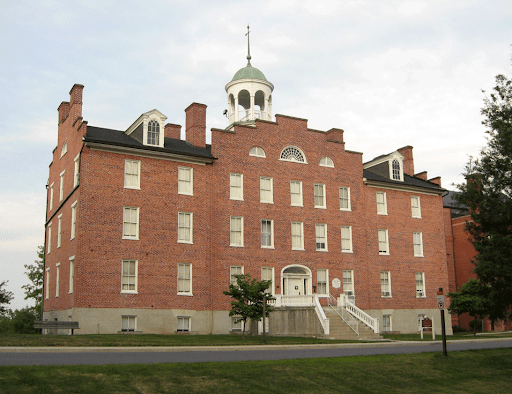
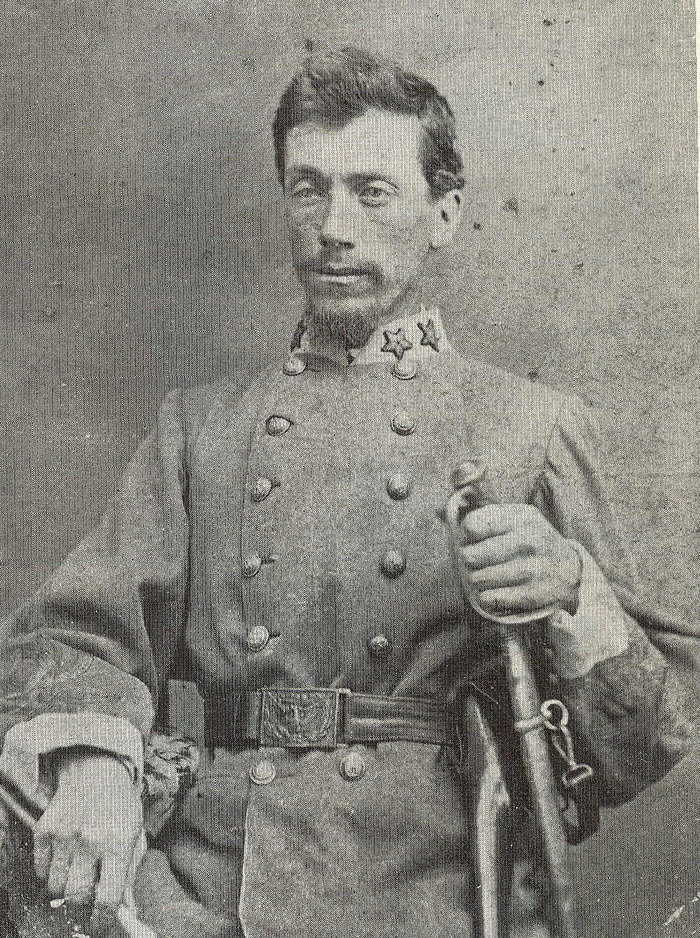
Luther Slater was born near Lovettsville in 1841. As a young man he worked towards a future as a clergyman, studying first at Roanoke College and then at the Preparatory Department of Pennsylvania College at Gettysburg (now Gettysburg College). His intention was to enroll at the now well known Lutheran Seminary there, but the coming of the Civil War interrupted his plans and set him on a new path.

A photo of Luther Slater taken later in life (FindAGrave/Edward Spannus).
The Lutheran Seminary in Gettysburg, where Slater planned to attend. The building now houses the fantastic Seminary Ridge Museum.

Slater returned home to Loudoun County, and in late June, 1862, he was one of dozens of local unionists who enlisted in a newly formed cavalry unit known as the Loudoun Rangers. Although only 21 years old at the time, he was elected 1st Lieutenant of Company A. The company was still assembling and new recruits were training two months later, when Slater and his command would endure their baptism of fire.

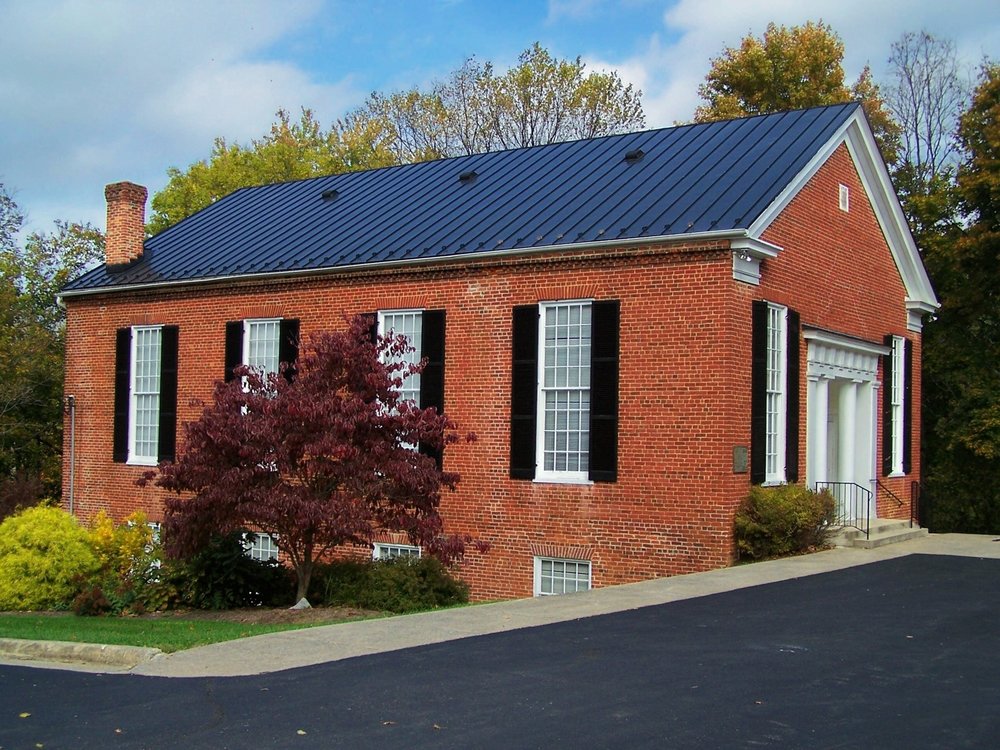
Early on the morning of August 27th, 1862 Slater and around 20 of his men were surprised and surrounded in the Waterford Baptist Church by Elijah White’s 35th Battalion of Virginia Cavalry. In the ensuing firefight that lasted several hours, Slater was wounded severely – shot in the head, shoulder, arm, and hand. When the outnumbered Rangers finally surrendered to White’s force, the Confederate commander is said to have told Slater “I am sorry to see you so dangerously wounded, Lieutenant.”

Maryland born Elijah V. White commanded the 35th Battalion of Virginia Cavalry, and was a frequent opponent of Slater and the Loudoun Rangers.
The Waterford Baptist Church, site of the August 1862 fight and Luther Slater’s terrible wounding.

With his life in the balance, the badly wounded Lieutenant was sent away to recover among friends that he had met while studying in Gettysburg. He became particularly attached to one of his caregivers, Mollie Yount. Luther remained in Gettysburg for several months, before returning to the army as a provost guard at Point of Rocks. It wasn’t a combat role, but his arm injury caused him repeated problems, which led to his resignation from the army in February, 1863. He returned to Gettysburg (and to Mollie), where it was hoped he would be far from the seat of the war.

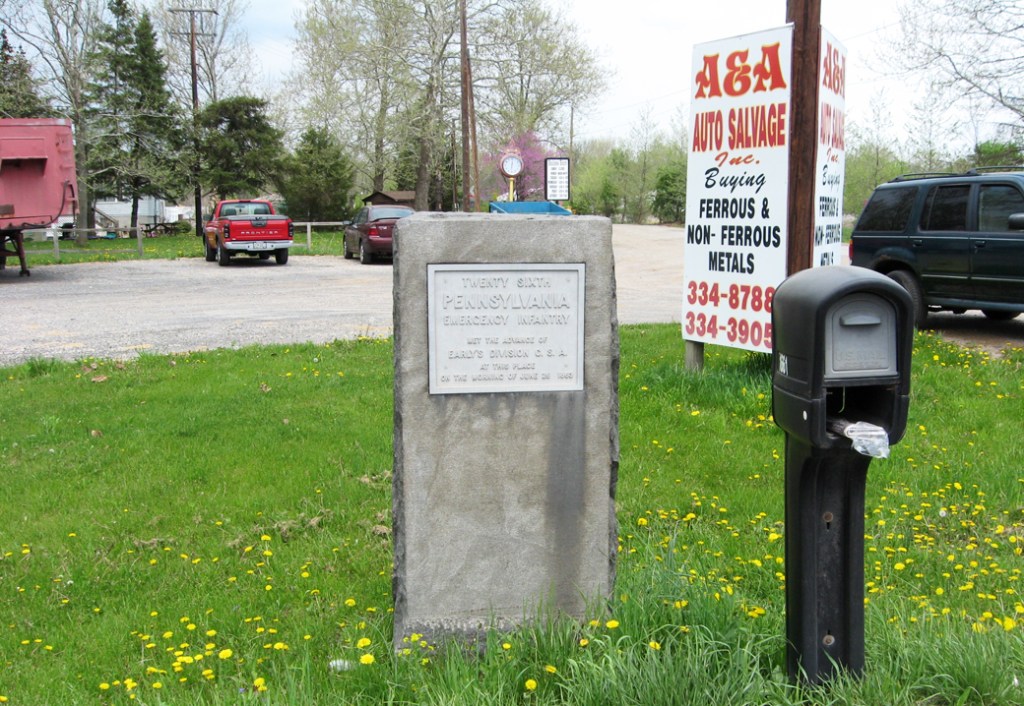
That summer, the war came to Luther Slater as the Army of Northern Virginia marched into Pennsylvania. The state’s governor called for emergency militias to be raised in an effort to slow the Confederate advance. Not one to forgo his duty, Luther Slater volunteered, despite his old wounds. The young Lieutenant, arm still in a sling, was soon at the head of a company of Gettysburg college and seminary students that became part of the 26th Pennsylvania Emergency Militia. On the morning of June 26th, this militia regiment, along with some local farmers mounted as cavalry, stood along the banks of Marsh Creek, just west of Gettysburg. Bearing down on them was a strong force of veteran Confederate infantry, with the horsemen of Elijah White’s 35th Battalion leading the way. The Confederate cavalry “came with barbarian yells and smoking pistols” and easily brushed aside the inexperienced militia, capturing many and routing the rest. Later that same day the militia attempted to regroup north of town, but was again driven off.

The Skirmish at Marsh Creek (Battlefield Trust)

Slater survived his second brush with Elijah White, and remained with the militia for the next month. He was detailed to the signal corps, and according to some sources he also served in the hospital corps as well. In November 1864, he married Mollie, and at the end of the war he and his bride moved back to Lovettsville. From there he had a distinguished career in politics and civil service – first as a constable and postmaster in Loudoun County, then as a 40-year career employee with the Federal government. His greatest contribution was with the Record and Pension Office, where he assisted with the organization of military records following the war. He was also a founder of the Washington, DC chapter of the Military Order of the Loyal Legion of the United States.

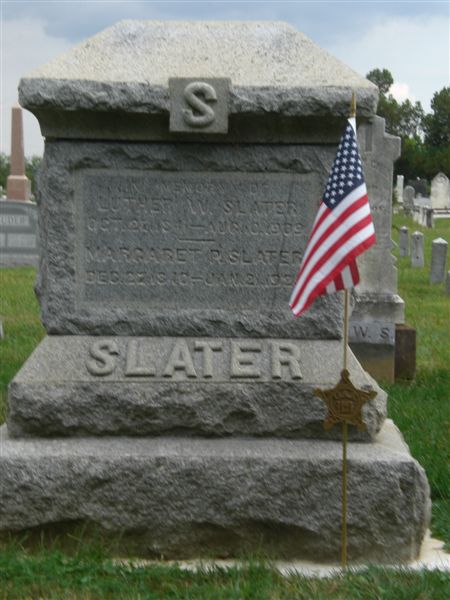
Slater’s gravestone in Lovettsville’s Union Cemetery (FindAGrave/Edward Spannus)

The story of Luther Slater is one of a man committed to service, whether it was to his faith, his community, or his nation. It’s also an example of two men from the same community – Elijah White and Luther Slater – who happened to face off against one another on the eve of the greatest battle of the Civil War.

For more information on Luther Slater, visit the Lovettsville Historical Society!

Class Activity: In your own words, please answer the following questions:

  1. What military units did Luther Slater serve in during the Civil War? How would you describe his military career?
  2. Name three ways that Luther Slater served the public.
  3. Using what you can research about the Civil War in the Heritage Area, why do you think Elijah White and Luther Slater chose to fight on different sides of the war? Visit the Mosby Heritage Area, the Loudoun Museum, and Loudoun History for more information.

Camelot in the Country

There is a long history of presidential visits to the Virginia Piedmont Heritage Area. Washington surveyed parts of Clarke County in his youth. James Monroe built his country estate at Oak Hill, near Leesburg, in the 1820s. In 1909, Teddy Roosevelt made a highly publicized ride to Warrenton and back in the middle of winter. Nearly every president passed through the area on their way to or from Washington, but few presidential visitors left a local legacy as enduring as John F. Kennedy.

The Kennedys first came to the Heritage Area in February 1961, shortly after John’s inauguration. An avid equestrienne, Mrs. Kennedy was drawn to the culture and landscape of Virginia’s hunt country. She arranged to rent the historic estate of Glen Ora, just outside of Middleburg. Unlike his wife, the President was not as enamored with hunt country. One Kennedy family biographer noted that he “preferred the ocean, not the countryside.” Despite his preferences, the family soon became fixtures around town.

Middleburg, like most communities in Virginia in the 1960s, was a strictly segregated town. African-Americans were not allowed to dine in at the local restaurants or pharmacy lunch counters. There were two separate Community Centers. When news broke that the newly elected president and his family were coming to visit in February, 1961, local African-American leaders saw an opportunity to strike a blow on segregation.

While local groups had fought for better schools and conditions for African-Americans for generations, the campaign to end segregation in Middleburg began with two students from Howard University. They sat down at the counter of Flournoy’s Drug Store, where they were refused service. That spring, a larger sit-in was planned for the same weekend that President Kennedy would be in town. It was specifically calendared on a Sunday, so the Kennedys -and the press that followed them- couldn’t ignore the protesters as the Kennedys attended mass at the Community Center. Wanting to integrate without scandal or violence, Middleburg resident and Loudoun NAACP leader William McKinley Jackson joined with Albert Pereira, a like-minded local Catholic priest. Together, Jackson and Pereira met with local leaders to insist that public businesses desegregate before the staged sit-in. Their case was simple: Middleburg had an opportunity to stand up for progress and equality, or to be known nationally as a backwards town. There was also the added pressure not to embarrass the visiting President.

(Below, William McKinley Jackson in the 1960’s, Albert Pereira at his ordination in 1940)

Jackson and Pereira’s argument was a convincing one, and the leaders agreed to end the segregation of public spaces. During his April 10th mass, Father Pereira led the congregation in prayer, “Let us pray together today that understanding and love may exist between the races, and that from now on, the area of communications be broadened so that Negroes will have the opportunity to become first-class citizens.” Buoyed by their success, Jackson and the Loudoun NAACP set their sights on Leesburg, and led desegregation efforts throughout the county. Fr. Pereira became a close friend and advisor to the President and his brother, Robert F. Kennedy.

While Kennedy never made public remarks about desegregation in Middleburg, America’s most famous family made long-term plans to be part of the integrated village. In fact, in 1962 Jacqueline met with the architect Keith Williams to build a Middleburg home, Wexford, that the Kennedys could call their own. Sadly, the family did not have much time to enjoy their new retreat. They only spent a handful of weekends together at their new getaway before President Kennedy’s assassination, and in 1964 the barely used home was sold. Although Jackie would continue to be a frequent visitor to Middleburg, it seems she could not bear to stay in the home she had built with her late husband.

President Kennedy and his daughter Caroline leaving services at St. Stephen the Martyr Catholic Church. The church was constructed near Middleburg in 1963 and has a plaque marking the family pew.

The Kennedys left marks across the Middleburg landscape, from Glen Ora to Wexford and St. Stephen’s. Part of that legacy is forever tied up with the civil rights story of Virginia and the timely action of William McKinley Jackson and Fr. Pereira. Middleburg can rightly be proud of how history was changed when Camelot came to the village.

Class Activity: In your own words, please answer the following questions:

  1. What changed in Middleburg between 1960 and 1962? (There are multiple correct answers)
  2. How did lunch counter segregation affect black residents in Loudoun County?
  3. List two individuals who helped end segregation in Middleburg. Why did these individuals do what they did?

“My Own Darling Magee”, A Leesburg Love Story

Mary “Mollie” Lack was just 15 years old when she met Tommy Magee. Born in Loudoun County, VA, “Mollie” was the only child of British-born William and Mary Lack. The small family lived a comfortable life in a house on North King St. in downtown Leesburg. Mr. Lack was a wealthy gardener, and the family were active in the St. James Episcopal Church community. When war came to Northern Virginia, lives of Leesburg residents were turned upside down. Along with war came thousands of young men from far-off places. Young men like Thomas Magee.

Magee enlisted in the Confederate Army in 1861, signing up with Company E, 18th Mississippi, in Corinth., Mississippi. Company E was mostly composed of students from Mississippi College, and they became known as the ‘Mississippi College Rifles’. In Fall of 1861 three Mississippi regiments fought alongside local battalions in the October 21 Battle of Balls Bluff, only a couple of miles from Leesburg. Magee and the others stayed near town over the winter, encamped at Oatlands and Morven Park.

Winter at Morven Park. Image from VisitLoudoun.org

Many soldiers came into town to socialize and go to church services. Truth be told, many church visits were made in order to flirt with the locals. In return, Leesburg belles ventured to camp to watch the young men drill and parade. By the close of 1861, Mollie and Tommy Magee were pen pals and visited as often as they were able. It wasn’t long before they declared their love for one another. On February 14, 1862, Mollie wrote in her diary that she and her “beloved Magee” sent each other Valentines. She went on to write,

“He was here [last] Wednesday evening. When he was going, he put his arm around my neck and kssed me, and said “I love you Mollie, you need not be uneasy.”. . I hope I may never be unworthy of his love.  He is so dear to me, my darling.”

From Harper’s Weekly, 1864

The two lovers were soon parted by the war. In March the 18th Miss. marched out of Leesburg towards Richmond, but not before Tommy and Mollie shared a tearful goodbye. “He cried fit to break my heart” Mollie declared. Almost exactly six months later Magee came back, as the Mississippi College Rifles with the Southern Army marched to Antietam. On Thursday, September 4, Magee came to call, and Mollie wrote,

“I knew his voice the minute I heard it. He has not changed one particle. . . He came out to where I was and put his arm around me and pressed a kiss on my lips . . . Next day he came and staid all day and all night and Saturday morning he left me for Maryland and O! how I love him. I love him ten times better than I did before. God protect him!”
Sadly, Mollie Lack and Tommy Magee were parted again. We don’t know if they met afterwards, no known correspondence survives. Mollie died, likely of consumption, on July 27, 1864, only a few weeks shy of her 18th birthday. Magee later deserted the Confederate Army and faded into obscurity. The only recorded words of Tommy Magee were his pledges of love to his sweetheart, Virginia’s Mollie Lack.

Class Activity: In your own words, please answer the following questions

  1. How do historians know what Molly was thinking and feeling?
  2. Examine the above image from Harper’s Weekly, “Valentine’s Day 1864.” Using examples from the picture, describe how people celebrated Valentine’s Day during the Civil War.
  3. Why don’t we know more about Tommy Magee?