A Look Back at the Year of John Marshall

The five counties of the Heritage Area have seen their share of important and influential men and women. At various times the area has played host to presidents, movie stars, generals, and others. When it comes to natives of the heritage area, though, it’s hard to argue that any have had a greater national impact than Fauquier County’s John Marshall. In his 35 years as Chief Justice, Marshall defined the role of the judicial branch, shaping the course of our nation in ways that continue to affect us today.

2019 was chosen to be the “Year of John Marshall,” as it coincided with the 200th anniversary of one of Marshall’s most important cases, McCullough v Maryland. To celebrate, MHAA planned a series of events that explored the life of the Great Justice, some of his most important cases, and his connections to Fauquier County. Join us as we take a look back at our Year of Marshall events.

1. John Marshall’s Richmond: A Bus Tour— Guests followed in the footsteps of John Marshall as we explored Richmond’s historic sites. Highlights of the tour included a guided tour of the Virginia State Capitol, guided tour of the John Marshall House, and a visit to the Virginia Museum of History and Culture to see the exhibit John Marshall: Hidden Hero of National Union.

2.The Life and Legacy of John Marshall: A Symposium— MHAA invited scholars to present on every aspect of Marshall’s life and career, from his legal legacy to his personal life and business connections. The symposium was held at historic Llangollen Farm, located on property once owned by the Marshall Family. Speakers and topics included:

  • Ben Lenhart, Georgetown University: John Marshall, Marbury v. Madison, and the Founding of the American Republic.
  • Candace Jackson Gray, Morgan State University: The Cohen Brothers Gamble on Chief Justice Marshall: Cohens v Virginia, 1821.
  • Jennifer Hurst-Wender, Director of Museum Operations and Education for Preservation Virginia: John Marshall at Home.
  • Kevin Walsh, University of Richmond Law, President of The John Marshall Foundation: John Marshall, McCulloch v. Maryland, and the Nature of Our Union.

3.The Patriot of the Piedmont: John Marshall and Fauquier County— MHAA visited John Marshall’s country estate, Oak Hill, as well as his childhood home, The Hollow. Local historian John Toler spoke on the efforts to commemorate Marshall in Fauquier County. He was followed by Mark Greenough, historian at the Virginia State Capitol, who portrayed the Chief Justice on a visit home to Oak Hill. For an in-depth look at the event, take a look at what one of our guests had to say in his blog. (Photos by Douglas Lees).

We want to thank everyone who came out to these events over the year! As we look towards 2020 we hope to continue offering more quality educational programming. Keep an eye on our events page for updates!
John Janney: Unionist, Secessionist, Quaker, Enslaver

In September 1862, General Robert E. Lee came to Leesburg, Virginia, in an ambulance. With one wrist broken and the other sprained, he and the Army of Northern Virginia were en route from the victorious battlefields of Second Manassas, and next they would strike onto Northern soil. Lee was only in town for a few days, and amid closed meetings with his generals and sons it appears he made time for just one social call of note. The General, with bandaged hands, had two of his young hostesses escort him only a few blocks from Harrison Hall to the home of John and Alice Janney.

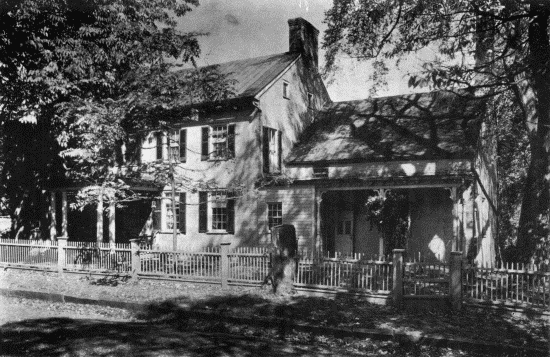
The John Janney House

Though Lee’s legacy is well known, Loudoun’s own John Janney has fallen out of public eye despite his political contributions to Virginia’s history. When the state’s secession convention was convened in February of 1861, Virginia’s county representatives lost little time in electing Janney as the body’s Chair. At this point, John Janney was well known as a Unionist, and had a long and storied track record as a pro-business pragmatic Whig. He also had a carefully cultivated reputation as an impartial private man and reluctant public servant, in the style of Cincinnatus and founding fathers like George Washington. In 1839 he and John Tyler were nominated as Vice Presidential candidates to William Henry Harrison. According to tradition, the vote tied and Tyler won by a tie-breaker vote. Janney later admitted that he had not voted for himself, losing the Vice Presidency and ultimately the Presidency to Tyler.

In subsequent years, John Janney was an outspoken critic of secession, pointing to business and cultural ties with the North, and citing Virginia’s contributions to the early nation as reason to stay. Despite his experience as a lawyer, member of the General Assembly, and active Whig, Janney was seemingly trepidatious about chairing the Secession Convention in ’61, stating:

Gentlemen, the responsibility resting upon this body is an awful one. When I agreed to be a candidate for this Convention…I said it with fear and trembling.

John Janney to the Virginia Secession Convention, February 13, 1861
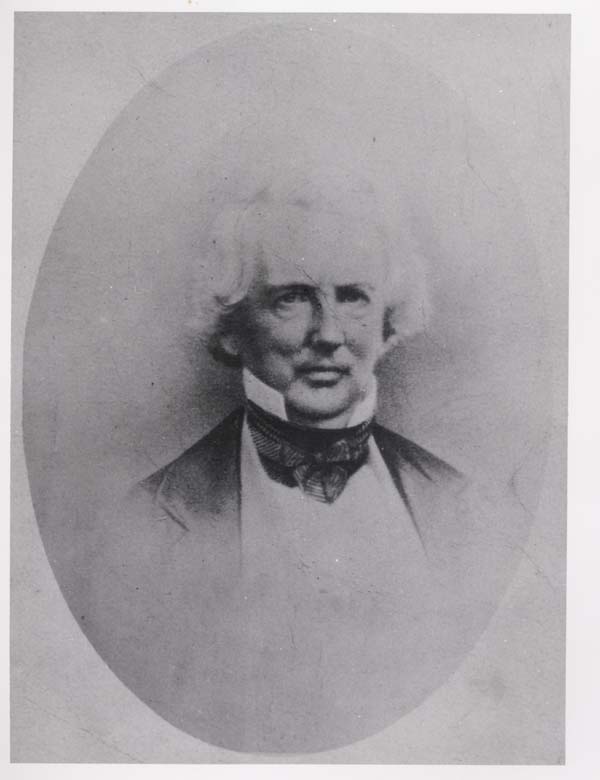
Portrait of John Janney

Part of his fear no doubt lay in the growing tension Virginia experienced early that spring. Although Janney was an avowed Unionist, he was not immune to public opinion or the widening gulf between the enslaving South and their Northern neighbors.

Born into a Quaker family, Janney lived in Loudoun County for most of his youth. The county had a large, industrious population of abolitionist Quakers and German immigrants, living in tenuous harmony with the white Anglo Saxon planters and a sizable enslaved population. As an young Assemblyman in the early 19th century Janney was an ardent abolitionist, even helping to draft a bill for the abolishment of slavery in Virginia. However, only a few years later the Janneys purchased their first enslaved worker, eventually owning four individuals to assist Mrs. Alice Janney with the Leesburg household.

Detail of the Town of Leesburg, Yardley Taylor map of
Loudoun County 1853.
The Courthouse is pictured at right, where John Janney practiced law. Enslaved people were sold on the Courthouse steps.

The Janneys lived in a strange duality representative of many Southern enslaving families. John himself was a supporter of the American Colonization Society and represented a black American living free who was charged with “stealing” his own enslaved wife. But John and Alice purchased enslaved workers and relied on rented enslaved labor to work their 500+ acre country estate east of Leesburg. In spite of his professed impartiality in the Secession Convention, it is easy to see how the growing pressure to maintain Southern rights to slavery manifested in his personal life.

John Janney remained a staunch Unionist until the end of Spring 1861, voting against secession even after the fall of Fort Sumter and Lincoln’s call for 75,000 volunteers. Only after the majority of the convention voted to secede did Janney change his vote to be in accordance with the larger part. He, like Robert E. Lee and others, threw their fate in with Virginia’s. Janney wrote to Alice faithfully during his time in Richmond, even if it meant penning letters into the early hours of the morning, since sessions often went until 11 o’clock. His decision to support secession weighed heavily on his conscience.

..I have used every faculty that I posses to prevent this catastrophe but it has come and the Commonwealth and the people must be protected to the up most of our country.

John Janney to Alice Janney, April 21, 1861

Two days later, as President of the Convention, John Janney presented Robert E. Lee with the sword of command, entrusting it along with these words:

When the Father of his Country made his last will and testament, he gave his swords to his favorite nephews with an induction that they should never be drawn from their scabbards, except in self-defense or in defense of the rights and liberties of their country, and, that if drawn for the latter purpose, they should fall with them in their hands, rather than relinquish them.

John Janney, April 23, 1861
The Janney House today

Only sixteen months later Lee and Janney met again at Janney’s home in a border town mere miles from an international line in war time. Leesburg was filled with marching soldiers, wounded and dying southerners, and the Stars and Bars flew overhead. Did one of the young Harrison girls knock on Janney’s door for the injured general? Did Janney himself answer, or did an enslaved housekeeper? What did the two Virginia sons talk about during their visit? While this exchange has not been left to history, John Janney’s complex life serves as a fascinating study into the hearts and minds of the men who brought the country to Civil War.

Come see the Janney House, Harrison Hall, and other landmarks this Friday during our walking tour, Legends by Lanternlight: On the Eve of Antietam

More about John Janney

Full text of the Virginia Secession Convention

Class Activity: In your own words, please answer the following questions

  1. What was John Janney’s attitude towards slavery?
  2. What was John Janney’s attitude towards secession?
  3. Do you think John Janney was a good leader? Why or why not?

A Founding Father’s Father

Although he would never achieve the fame and recognition that his son would, Thomas Marshall was one of the most influential men to come out of the Heritage Area in the 18th century. He served as a soldier, statesman, and politician through the tumultuous decades surrounding American independence.

“. . to his care I am indebted for anything valuable which I may have acquired in my youth. He was my only intelligent companion; and was both a watchful parent and an affectionate friend.”

John Marshall, about his father Thomas Marshall

Thomas Marshall was born in Westmoreland County, Virginia in 1730, to a well off planter family. As a young man, Thomas moved to what was then Prince William County, arriving there just in time to serve as an officer in the County militia during the French and Indian War.  During this same period he worked as a surveyor, measuring and mapping the vast Northern Neck grant alongside his peer, the young George Washington. They both benefited from connection to Thomas, 6th Lord Fairfax, and several First Families of Virginia who were settling in the western counties of the state. Both Marshall and Washington continued to work together in the Virginia House of Burgesses through the 1760s, adding to their sociopolitical reputations.

theHollow
The Hollow, near Marshall, Virginia, still stands today. Thomas Marshall lived here with his wife and many children.

In 1763, Thomas moved his growing family into a 28 x 16 foot cabin nestled in the hills of northern Fauquier County that he named The Hollow. From this humble home, Thomas Marshall continued to serve the community as a delegate, county sheriff, and vestryman of Leeds Parish. Built ca. 1763, it was home to the Marshalls for a decade. Though small in comparison to today’s homes, the Hollow was certainly appropriate for a Virginian of growing stature, especially as it allowed them the resources to build the family’s estate home, Oak Hill.

OakHill
Oak Hill, near Delaplane, Virginia. The right portion was built for Thomas Marshall in 1773. The larger portion on the left was constructed for John Marshall in 1819. The home passed from the Marshall family in 1864.

As his standing in the community grew, Thomas moved his family to a more fitting home, located a few miles east of The Hollow. Built in 1773, Oak Hill would remain in the Marshall family for nearly a century.

As relations strained between the colonies and Great Britain, Thomas was selected to serve as the Major of the Culpeper Minute Battalion, with his son John taking the rank of Lieutenant. When hostilities began in Virginia in the summer of 1775, Thomas and John led their men south, fighting alongside other volunteer companies to drive Governor Dunmore and his troops from the colony. When Virginia organized a number of new regiments for Continental service in 1776, Thomas Marshall received a commission as Major in the 3rd Virginia Regiment. The 3rd was soon on its way to join Washington’s army outside of New York.

Through the next few years the 3rd Virginia would be in the thick of the fighting at some of the most important battles of the Revolutionary War. They held their own against the British at Harlem Heights. They were at the forefront of the attack on Trenton. They stubbornly held the American flank at Brandywine, buying precious time for Washington to reposition his army and avoid disaster. Through it all, Thomas Marshall steadily climbed the ranks, first as Lt. Colonel, then as Colonel.

“The Battle of Harlem Heights”, a retrospective illustration by Civil War artist Alfred Waud

As the army prepared to go into winter quarters at Valley Forge, however, it became clear that this campaigning had taken a toll on Thomas Marshall. His old friend Washington accepted his resignation in December, 1777, and Thomas returned to Virginia to take command of a newly raised regiment of state artillery. After the war, Thomas ventured west to Kentucky to take advantage of military land bounties. He settled near Lexington, and returned to his former trade as a surveyor. In 1785 he made a brief return to Virginia, taking time to convey Oak Hill to his son, John. Thomas Marshall died in Kentucky on June 22nd, 1802.

To learn more about both John and Thomas Marshall we invite you to join us on Sunday, September 15th for “The Patriot of the Piedmont: John Marshall and Fauquier County.” Listen to talks by Marshall historians, take a guided tour of The Hollow, and enjoy refreshments at Oak Hill. For tickets or information visit www.MosbyHeritageArea.org/events or call (540) 687-5578.

Class Activity: In your own words, please answer the following questions

  1. Before the Revolutionary War, Thomas Marshall was relatively wealthy. How do we know?
  2. Which battles did Thomas Marshall and the 3rd Virginia fight in?
  3. Examine the above photos, “The Hollow” and “Oak Hill, near Delaplane.” What do you notice about these houses as they are built over time? What does that suggest about the Marshall family?

Chasing the “Panther of the Valley”

Late in the summer of 1864, James E. Taylor returned to northern Virginia. It wasn’t his first time in this particular stretch of the Piedmont. In 1862 he marched through as a soldier in the 10th New York Infantry, but now he was here in a different role. The young ex-soldier was a skilled sketch artist, and he was in Virginia to follow General Sheridan’s campaign in the Shenandoah Valley as a correspondent for Leslie’s Illustrated magazine.

20190508_133215
Taylor’s sketch map of “Mosby’s Confederacy”

Taylor would spend months travelling up and down the Valley and the surrounding area, producing numerous sketches and taking meticulous notes in his diary. In the decades after the war he used this diary as the basis for a massive volume entitled With Sheridan up the Shenandoah Valley in 1864: Leaves From a Special Artist’s Sketch Book and Diary. The manuscript contains an edited version and annotated version of the original diary, as well as more than 500 sketches drawn from his wartime work. It’s an amazing work of both history and art, and it provides a fascinating look at the Civil War through Taylor’s eyes.

One of the many subjects that drew Taylor’s attention was John Mosby. The artist spent a great deal of time in what is now the Heritage Area, and the exploits of the area’s most famous raider made great adventure stories for his readers. Taylor himself traversed “Mosby’s Confederacy” many time – often alone – to restock his art supplies at Harper’s Ferry, and the capture by Mosby’s men was an ever present threat. In his manuscript he gave Mosby a unique nickname. Today we tend to think of Mosby as the “Gray Ghost,” but to Taylor he was the “Panther of the Valley.”

20190508_132754
The “Panther of the Valley”

Taylor’s first encounter with Mosby’s Rangers occurred early in his journey. The artist was spending time with Union horsemen of Cole’s Maryland Cavalry stationed at the Old Chapel near the village of Millwood. As the blue-coated troopers rode off in the direction of White Post, Taylor caught a glimpse of several of Mosby’s men in the distance. He wrote about the encounter in his own, very particular way:

Here for the first time Mosby’s men were in evidence, but we were not disturbed by their presence as they were scant in number and kept a respectful distance…Naturally we were much interested in our friends the enemy as were they were with us, and not only kept a sharp lookout, but our binoculars as well, on the alert “Vigilantes” ever ready for a swoop, numbers warranting…One of the rangers, on a powerful black in the run, standing out in relief against the bank, especially attracted. His face was the face of a Devil may care, not yet out of his teens who with eyes strained eagerly scanned us while fingering his Colt as if tempted despite the distance, to salute us with a leaden compliment. I drew him with my glass till I had gotten his features by heart from his remaining immovable like one posing before a camera.

Packet4-MosbysRangers
The young Ranger encountered in the creek near White Post, as sketched by Taylor

Capture
The same stretch of road as it appears today, with the creek running across the center of the photo

This would not be Taylor’s last encounter with Mosby’s men, but it was certainly a lasting first impression.

To learn more about James Taylor and his sketchbook, join us on August 24th for the “Art of War” bus tour. We will visit several of the sites sketched by Taylor in 1864, to compare the historic landscape with that of today. Tickets are limited, so visit http://www.MosbyHeritageArea.org/events or call (540) 687-5578 to reserve your seat today!

Class Activity: In your own words, answer the following questions

  1. How were artists used during the Civil War?
  2. What did Taylor think of Mosby? Was he impressed? Scared? Justify your answer.

The Checkered Life of Charles Snoots

A thrilling scene: In the early morning hours of August 27, 1862, the new Waterford Baptist Church is wreathed in gray-blue gunpowder smoke. Dismounted Confederate soldiers from Elijah White’s 35th VA have taken up positions behind a neighboring house and are pouring minie balls into the windows and inner walls of the church. Inside, about twenty Loudoun Rangers return fire, though they are quickly running out of ammunition, and water for the wounded.

The Waterford Baptist Church, where Charles Snoots was taken prisoner by his older brother William Snoots, August 27, 1862.

The fight can only end one way. With no hope of reinforcements, the Rangers last three hours before agreeing to surrender. While paroling the prisoners, Confederate William Snoots loudly declares that he is going to murder the man in his custody. His prisoner apparently retorts that if they were evenly armed William wouldn’t stand a chance. His spitfire prisoner was no other than Charles Snoots, his own younger brother.

Charles Snoots was born on October 11, 1846 in a place called Hoysville (now Taylorstown), a tiny hamlet near Lovettsville Virginia. The youngest of 8 children, Charles’ short life would be filled with conflict. In 1854 he and an older brother, John, rode their horse through town and past the Taylorstown mill dam. Their horse stumbled, throwing the two boys into the water, supposedly running high after several days of rain. According to an October 2 report in the Alexandria Gazette, “The elder brother .. lost his life, in the noble effort to save his younger brother.”

The circa 1800 Taylorstown gristmill, a scene of tragedy for the Snoots family.

Several years after that tragic incident, Charles found himself on opposite sides of a war with his own brother. Though only 15 years old* at the time, Charles was among the first to sign up with the Loudoun Rangers on June 20, 1862 in nearby Waterford, Virginia. In some ways he was following the footsteps of older brother William, who had also enlisted in Waterford in January of the same year- except of course that William had signed up to fight for the Confederate States of America. It’s clear from their exchange in August of 1862 that there was little love lost between the brothers during the melee.

At this time, historians can only speculate what the Snoots family at large thought about the war. Lovettsville and Waterford were populated by peace-loving Quakers and Lutherans, who eschewed slavery and many of the trappings of the secessionist South. But of course there were loyal Virginia sons among them who eagerly took up arms to defend her. Charles and William were mustered out of service within a week of each other in May of 1865, one in Bolivar WV, the other at Harper’s Ferry.

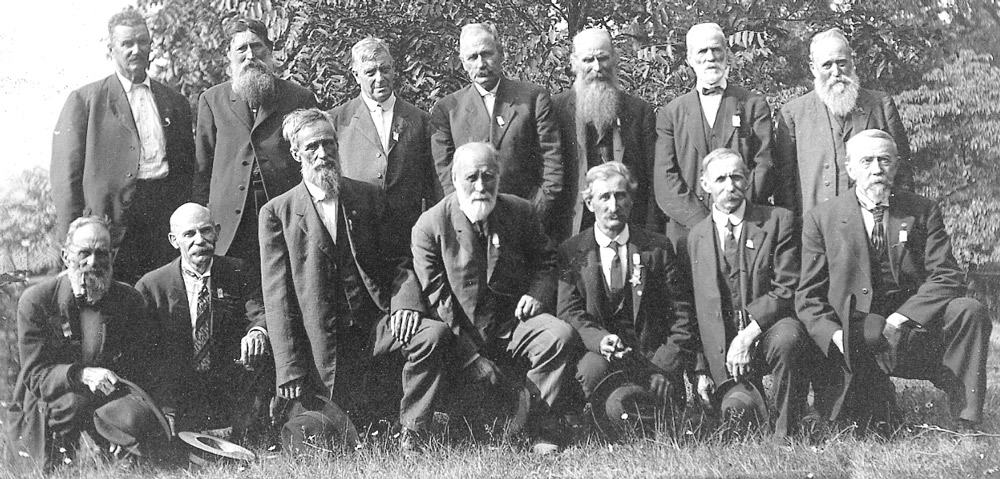
Loudoun Rangers veterans, c. 1910

Charles returned to Taylorstown after the war, but he did not settle into a peaceful life. On September 11, 1869 he was shot in the chest and died. Another Taylorstown resident, George F. Cooper, was charged with the murder of Charles Snoots but was released in 1870. The trial was declared ‘not a true bill’, meaning there was insufficient evidence to even present to a jury. Charles was buried in the New Jerusalem Presbyterian Church in Lovettsville, but his grave is unmarked. Several of his siblings, including brother William, are buried in the same cemetery with handsome headstones. According to the minister’s book, Proverbs 17:14 was read at Charles Snoots’ funeral service:

“Starting a quarrel is like breaching a dam;

so drop the matter before a dispute breaks out.”

Charles Snoots’ life story ends with many questions. If the above passage is any indication, contention and tragedy followed him through his 22 years. Like many families across the Mosby Heritage Area, the Civil War added years of strife on top of already emotionally charged family histories.

*The 1860 census recorded August 22, 1860 lists Charles Snoots’ age as 13. His enlistment papers claim he was 19 just two years later, but Charles would not be the first or last boy to lie about his age to sign up for the war.

Further Reading about the Loudoun Rangers and 35th VA:

Class Activity: In your own words, please answer the following questions

  1. What made the August 1862 fight in Waterford unusual?
  2. What happened in the Snoots family’s past, and why might that make Charles and William Snoots dislike each other?
  3. Why did Charles Snoots lie about his age?

“Fought everywhere, was beaten nowhere”

With Independence Day right around the corner, the staff at MHAA are looking into some of our area’s Revolutionary War history. No battles were fought in the Heritage Area between 1775 and 1783, but the war did impact northern Virginia in many ways. Hundreds of local men volunteered for service in the Continental army, while hundreds more served for weeks or months in the local militias. Those who remained behind on the home front supplied crops, livestock, clothing, and other material necessary to keep the army in the field. Armies traversed the area on numerous occasions, and British, Loyalist, and German prisoners of war were confined here. The Revolutionary War touched the lives of everyone in the area, but if we want to focus on just one individual – the local resident who had the greatest impact on the war – it would have to be Daniel Morgan.

DanielMorgan
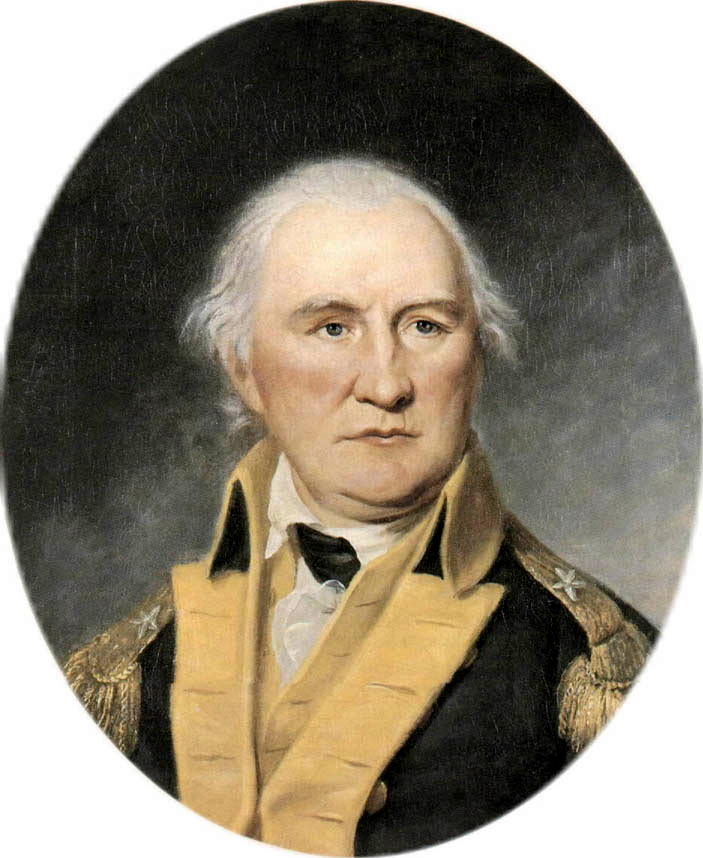
General Daniel Morgan

Born to immigrant parents in Hunterdon County, New Jersey, Daniel moved to what is now Clarke County as a teenager. He settled near a frontier village so renowned for its brawling inhabitants that it earned the name “Battletown.” The rough nature of the town suited young Daniel and his combative nature, and he soon earned a reputation as a brawler.

battletown
The Virginia House in Battletown (Berryville). As a young man, Morgan earned a reputation as a fighter at this tavern. 1864 sketch by James Taylor. To see more of Taylor’s sketches join us August 24th for our Art of War Tour.

Daniel Morgan put his fighting skills to good use during the French and Indian War, where he accompanied General Braddock’s expedition to Fort Duquesne as an army teamster. Surviving the disaster at the Battle of Monongahela, Morgan served the rest of the war in the Virginia provincial forces. During this period he participated in several raids and skirmishes against Native Americans, and during one such raid he suffered a gunshot wound through the mouth. He soon recovered and returned to Battletown, where he married and settled into life as a prosperous farmer.

War came again in 1775, as the Thirteen Colonies rebelled against British rule. In the summer of that year, Congress authorized the raising of ten companies of riflemen to reinforce the army besieging Boston. Virginia would provide two of those companies, and Morgan was chosen to command the one then assembling at Winchester. In one of the most legendary feats of the war, the rifle companies from Virginia and Maryland were able to cover the distance to Boston – nearly 600 miles – in just over 20 days.

25a-varifleman
A Virginia Rifleman, by Lt. Richard Mansergh-St George

Through eight long years of war, Morgan was chosen to command during some of the toughest campaigns. He led part of the force that crossed the Maine wilderness with Benedict Arnold as they tried to take Quebec. His provisional corps did much to turn the tide of battle at Saratoga, winning the victory that would secure foreign recognition for the American cause. Later in the war he commanded American forces in the south, winning a smashing victory over the British and Loyalists at Cowpens. Future Chief Justice John Marshall later wrote about Cowpens, stating “Seldom has a battle . . . been so important in its consequences as that of Cowpens.”

Surrender_of_General_Burgoyne
The Surrender of General Burgoyne
by John Trumbull. Morgan is near the center in the white hunting shirt.

As the war wound down, Morgan returned to Virginia. Plagued by his old wounds and exhausted by hard campaigning, he settled back into his life as a farmer. Morgan owned two homes in the vicinity of Battletown (now Berryville). Soldier’s Rest is located on the northern edge of town, while Saratoga lies further south, near Boyce. Both homes are still privately owned and are not open to the public.

In 1780, he partnered with planter Nathaniel Burwell and together they constructed a large grist mill which still stands in Millwood. The mill is owned and operated by the Clarke County Historical Association, and it is regularly open to the public.

Burwell Morgan Mill
The Burwell-Morgan Mill.

Another site that is publicly accessible is his grave. In 1868, Morgan’s remains were taken from the Old Stone Church in Winchester and moved a few blocks away to Mount Hebron Cemetery. His original gravestone is there, as well as a modern monument to the “Old Waggoner.” A modern statue also stands at his original burial site. On the base is an inscription that reads “Fought everywhere, was beaten nowhere.” A fitting tribute to one of the hardest fighting leaders of the American Revolution, and one of the best known patriots of the Heritage Area..

Class Activity: In your own words, answer the following questions

  1. Why was Berryville once nicknamed “Battletown?”
  2. Which Revolutionary war battles are Daniel Morgan best known for? Why?
  3. What Daniel Morgan sites can people still visit today?

Footnotes from the Front Line: The Best Farm

As part of the lead up to our Civil War Conference, MHAA staff went outside of the Mosby Heritage Area to scope out the route through the Battle of Monocacy, also known as ‘The Battle that Saved Washington’. One of my favorite aspects of Civil War history is how the conflict swirled through farms and communities, leaving indelible marks on the landscape. By preserving the Civil War stories of these areas, we are also preserving the stories of residents, soldiers, enslaved peoples, and nation builders who came before. The Best farm is a great example of this.

The main house, with a glimpse of the c. 1794 stone barn behind

During the Civil War the property was leased to David Best, then to his son John. The farm is still known by the ‘Best’ name, even though the family never owned it. The land was first a permanent residence in the 1790’s, when a French-Caribbean family came to Maryland to escape the slave revolts in Saint Domingue (modern Haiti). The immigrant family included Marguerite Magnan de la Vincendiere, her children, a cousin named Jean Payan de Boisneuf, and twelve slaves. They soon established a household on the property, which they named L’Hermitage. Though several original buildings occupy the site, only the stone barn retains its distinctive 18th-century hipped roof.

The hip roofed barn, an unusual site on Maryland farms

The Vincendieres quickly acquired more land and slaves, enslaving about 90 individuals by 1800. Victoire Vincendiere and Jean Payan de Boisneuf were allegedly cruel and negligent masters, and were brought to court on separate occasions for the treatment of their enslaved workers. By 1820 they sold over half of their servants, perhaps finding that Maryland’s wheat and corn fields did not require as much labor as the family’s sugar, coffee, and indigo plantations on Saint Domingue.

The ‘second house’ was often occupied by fellow French-Caribbean immigrants in the 1790’s. Up to six slave cabins probably occupied the field in the background from 1800-1820, while Georgetown Pike in the distance was the site of skirmishing during the Battle of Monocacy in 1864.

Decades later, the Civil War first appeared at the Bests’ doorstep in September of 1862 during Lee’s Maryland Campaign. While moving troops through the area, research suggests that the Best Farm is where Lee’s Special Order 191 was lost and later found by Federals, giving key information to Gen. McClellan ahead of the battle at Antietam. Nearly two years later the farm was witness to fighting along Georgetown Pike and at neighboring properties along the Monocacy as Jubal Early’s Confederates clashed with forces under Lew Wallace in July of 1864. Though Early was able to overpower the smaller force, Wallace’s delay tactics bought time for Federal troops to reach Washington D.C. before the rebels.

The Thomas Farm, where Union soldiers were overwhelmed, opening a path to Washington. Note the Swisser-style barn, a staple in this area (and no hipped roofs!)

The signposts and audio tour understandably focus on the events of July 9, 1864, but it is not difficult to peel back subsequent layers of time and discover just how much history lies within this landscape. Though separated by a state line and many miles, the area’s blend of national history and Appalachian foothills feels an awful lot like our own Heritage Area.

Current residents of the Thomas Farm

Eager to learn more about the Battle of Monnocacy and Jubal Early’s 1864 Maryland campaign? Join MHAA in October for the Conference on the Art of Command in the Civil War!

A (Cool) Spring afternoon in the Heritage Area

Last week staff went to survey one of the tour sites MHAA will highlight during the Civil War Conference this fall. Cool Spring Battlefield is a newly preserved historic site, until 2013 it operated as a golf course along the Eastern bank of the Shenandoah near Bluemont, Virginia. Now it is the River Campus of Shenandoah University, a landscape dedicated to environmental and historical stewardship.

Native shrubs are quickly reclaiming the area

Paved golf cart trails make the park an easy and fun walk for history buffs, cyclists, and nature lovers. Although most of the fighting on July 18, 1864 happened on the opposite bank (now privately owned by Holy Cross Abbey), the paths are dotted with interpretive signposts describing the crossing made by Union forces under Crook and Thoburn. Attempting to chase down Jubal Early’s Army of the Valley after probing the defenses of Washington D.C. at Fort Stevens, the Federals began crossing the Shenandoah River just north of Castleman’s Ferry.

The southernmost crossing point, forded by Thoburn’s Federals

By skirting around the ferry, Federal troops were able to cross without heavy opposition and form a battle line along a stone wall bordering the river’s edge and Cool Spring Farm. When Confederate General Breckenridge heard of the advance, he sent Wharton’s and Gordon’s divisions to push them back down towards the river, while Rodes’ division punched through the Union right flank. The Federals retreated back across the river, allowing Early’s rear guard to continue up the Valley unimpeded.
Want to know more about Jubal Early’s 1864 Maryland Campaign? Come to our 22nd Annual Conference on the Art of Command in the Civil War!

Today’s visitors will enjoy following the battlefield with on-site guides (Photo 1), exploring the heights near the 1st Rhode Island artillery position (Photo 2), admiring the river and crossing sites to Parker Island (Photo 3), and learning about The Retreat, home to Judge Richard Parker (Photo 4).

Did you know?

  • Union forces knew to cross north of Castleman’s Ferry thanks to Confederate deserter John Carrigan
  • The Retreat was first built and inhabited by a Revolutionary War veteran Thomas Parker, who was also called to service as an officer in the War of 1812.
  • John Singleton Mosby’s 43rd VA used Snickers Gap and Castleman’s Ferry for frequent access to the Shenandoah Valley, including on October 14, 1864’s “Greenback Raid“.


The battlefield at Cool Spring is a great day time experience without the crowds of larger Civil War sites. If you’re looking for a bite or beverage afterwords, nearby Dirt Farm Brewing offers spectacular views of the Heritage Area looking east across the Loudoun Valley. Once you See it, be sure to Save it and Pass it on!

On a clear day like this, you may be able to see up to 20 miles of the eastern Heritage Area from Dirt Farm in Bluemont, Virginia.