Aldie’s Eleanor Truax Harris: “One of Virginia’s Best Citizens”

Eleanor Truax was born in 1869 to US Army Captain Sewall Truax, a Civil War Union veteran, and Sarah Chandler Truax, both born Canadians, but raised as New Englanders. After the Civil War, Major and Mrs. Truax were stationed at Fort Lapwai in the Idaho Territory with the US Army, preventing prospective miners from invading the Nez Perce Reservation during the 1860s gold rush. Major Truax ran a general store on the Reservation prior to the family’s departure for his next post, facilitating the building of a road through the Lolo Pass, a former Nez Perce trail crossed by Lewis and Clark in 1805. Eleanor Truax grew up in the wild northwest, among the rough and tumble manifest destiny of frontier culture, neighboring with Native Americans, prospectors, career soldiers, and rugged terrain.

Fort Lapwai c. 1917

Eleanor Truax became a teacher in Spokane, Washington, where she married and was widowed very suddenly at a young age. Mining stock from her late husband gave Eleanor financial security, which allowed her to grieve in Europe, studying foreign languages, music, and culture until the onset of the Spanish-American War brought the family back to Walla Walla, Washington. There she met Captain Floyd Harris who was training troops preparing to depart for the Philippines, before embarking himself to join General Arthur MacArthur as an aide-de-camp. They started writing each other and later married in Hong Kong in 1900.

In the early years of their marriage the Harrises raised their children in Manila, England’s Lake District, and Vienna, where Col. Harris served at the court of Emperor Franz Joseph. Mrs. Harris joined the Royal Horticultural Society of London and fell in love with England’s narcissus, or daffodil, relating to the Lake Poets, especially Wordsworth who canonized the flower with his 1815 “I Wandered Lonely as a Cloud.”

And then my heart with pleasure fills, And dances with the daffodils.

William Wordsworth (1815)

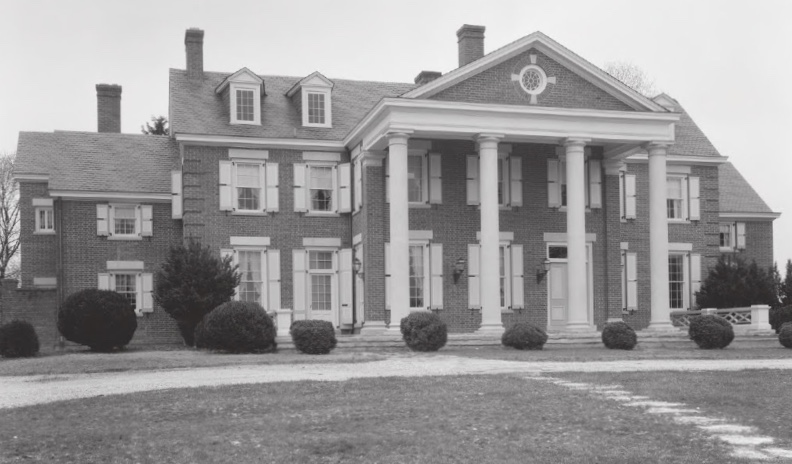
In 1907, the Harrises returned to America in search of an inspiring weekend retreat, which they found in Aldie at Stoke. Mrs. Harris immediately upon seeing Stoke, stated “This is home.”

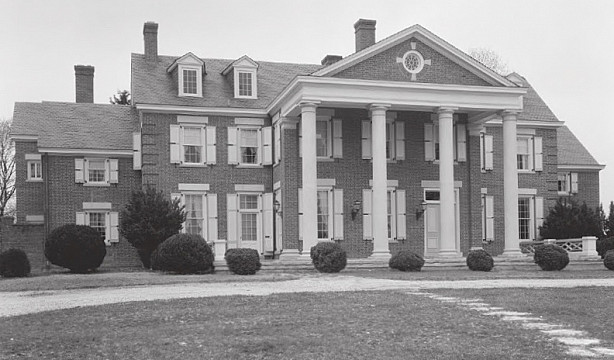
Stoke as it appears today

It became more than just a weekend home. She went straight to work transforming the grounds into terraced gardens with hedges of boxwood and rows of daffodils, breathing European flair into this historic Virginia farm, formerly owned by the Berkeley family of longstanding Virginia pedigree.  Eleanor worked with Beaux Arts architect Nathan Wyeth to renovate and expand the 1840 Greek Revival home into a Renaissance Revival estate.  Nathan Wyeth later would design a bevy of the Embassy buildings and official residences in Washington, D.C., in addition to the D.C. Armory, and the West Wing of the White House. They together accomplished a simpatico blending of the two eras of Stoke into such a stunning masterpiece which was listed on the National Register of Historic Places in 2015.  In addition to its architectural design, the register accepted the nomination because of the legacy of Eleanor Truax Harris and her contributions to horticulture.

Eleanor Harris created the Berkeley Nurseries at Stoke, which became the Narcissus Test Gardens for the Garden Club of Virginia. She nurtured and hybridized daffodils and as the Garden Club of Virginia’s publication Garden Gossip stated, she introduced daffodils to the general Virginia gardener who may previously have given them little notice. Mrs. Harris predicted Holland bulbs would be embargoed by the United States in 1925 due to Dutch Elm Disease, and she arranged large shipments of bulbs to beautify the village of Aldie and its surrounding homes with daffodils. Mrs. Harris founded the Aldie Horticultural Society in 1923 with her group of fellow gardeners who also planted the imported bulbs, giving them the nickname of the “Aldie Bulb Growers.” This later enabled Aldie families struggling financially during the 1930s to make money selling cut flowers that were taken by train from The Plains, Virginia to New York City. Women seldom could assist in providing income in upper-class homes, due to social mores and tradition, but in this instance, Mrs. Harris provided an outlet for women to engage in industry without undue judgment.  Her boxwood cuttings also made their impact on the surrounding countryside. The Garden Club of Virginia noted in 1937 that: “The renaissance in box was largely due to Mrs. Harris. She loved this beautiful evergreen and grew acres of different varieties with extraordinary success.”

Stoke gardens today

At her passing in 1937, editor Douglas Southall Freeman wrote of Mrs. Harris in the Richmond News Leader

“The gracious obituary of Mrs. Eleanor Truax Harris we had the pleasure of printing Saturday did not overstate the services of one of Virginia’s best citizens…. Her home, Stoke, at Aldie, not only is one of the most beautiful places in Virginia but also was the seat of a hospitality and a kindly culture that enriched thousands.”

Richmond News Leader, April 9, 1937

Eleanor Truax Harris was the spouse of a well-regarded statesman with an accomplished career, but she established her own fame and legacy.  A generous, community-minded woman, Mrs. Harris brought a quintessentially American strength and toughness mixed with a sophisticated European sensibility to Aldie. She was the perfect match to Col. Harris, and was equally comfortable in the high courts of Europe and the hills of Virginia.  Her flair, vision for improvement and beautification all speak to Mrs. Harris’ artistic character; the daffodil imprimatur she left blooming in her beloved village speaks to her continuing presence and legacy.

Roosevelt’s Ride

Teddy Roosevelt has gone down as one of the biggest personalities to serve as President of the United States. He overcame childhood illness and went on to carefully cultivate an image of strength and ruggedness as a war hero and outdoorsman. As president he championed a number of conservation issues, anti-trust legislation, and a strong foreign policy. During the last weeks of his presidency, however, his attention turned to another issue – the physical fitness and preparedness of America’s military officers. Roosevelt proposed a series of physical challenges that all military officers would have to complete annually. Officers could choose to undergo an 80 mile ride on horseback, 100 miles by bike, or 50 miles by foot, but had to complete their journey in three days. Although Roosevelt thought the requirement reasonable, the order was widely protested throughout the armed forces. Undeterred, the President decided to make an example out of himself.
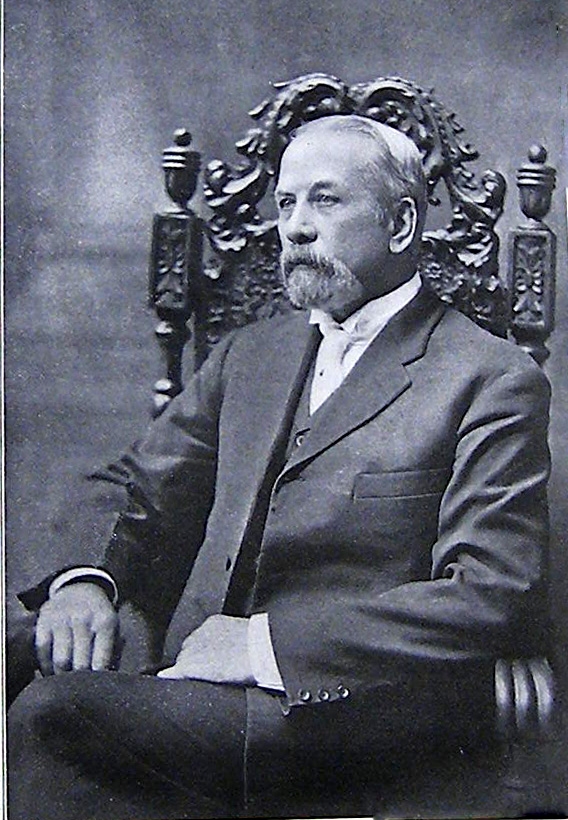
Roosevelt, along with his Rough Riders and other US Volunteers during the Spanish-American War.

In January, 1909, Roosevelt planned a ride that would take him 100 miles by horseback in a single day. Three officers would accompany him on the ride: Captain Archibald W. Butt, his military advisor, Admiral Presley M. Rixey, Surgeon General of the Navy, and Lieutenant Cary T. Grayson, a Navy Doctor who served on the Presidential Yacht. Their destination would be Warrenton, Virginia, which lay about 50 miles from the White House. Both Grayson and Rixey were Virginia natives, and knew the route well.

Cary Grayson, who accompanied Roosevelt, was an accomplished equestrian. He later rose to the rank of Rear Admiral and was the physician to Woodrow Wilson.

The Preseident woke at 2:30 AM on the morning of January 13th. The weather was bitterly cold, and a blizzard had been forecast for later in the day. Unfazed by the weather, Roosevelt breakfasted on steak and coffee and underwent a brief physical exam before joining his companions at the White House gates. The four men mounted their horses at 3:40 AM and set out into the winter darkness. Within ten minutes they had crossed into Virginia.

Their route took them along good roads to Falls Church, but the going got tough as they pressed on to Fairfax, where the deeply rutted roads were frozen solid. The party reached Fairfax Courthouse around 6:30, and made a short stop to change horses. The President was dismayed to find that his favorite horse, Georgia, was not there waiting for him, and had to make do with an Army mount from nearby Fort Myer. With fresh horses the group moved at a trot towards Centerville, the halfway mark of their journey to Warrenton, and they changed horses for a second time between Centerville and the old Manassas battlefield. As they rode across the battlefield, Roosevelt supposedly quipped about the spirits of the long dead Union soldiers, and what they might think of him riding alongside three southerners.

Although the ride was planned in secret, it was impossible to keep it confidential for long. As the sun rose, passers by recognized the President. When the group rode through the village of New Baltimore, a merchant recognized Roosevelt and phoned ahead to friends in Warrenton. The rumor was confirmed when town residents noticed Secret Service guards gathering at the Warren Green Hotel, where the group would take their lunch. By the time Roosevelt and his companions arrived in Warrenton, a group of several hundred had gathered to get a look at the President. Roosevelt indulged them with a quick address before sitting down to a lunch with Commodore John Wise, a Warrenton resident and old friend of Roosevelt’s from the Spanish-American War. The President hurriedly drank two cups of tea and some soup as a number of town dignitaries were introduced. In little more than an hour after their arrival, the party was back in the saddle and on their return to Washington.

The Warren Green Hotel, where Roosevelt and his compatriots lunched.

While the journey out had been relatively uneventful, the return would be far more difficult. As the group changed horses again, they found their new mounts were increasingly unruly. Captain Butt’s horse “fought the bit the entire way” and narrowly missed kicking Lieutenant Grayson. Then, as they neared Centerville and the halfway point, the weather turned ugly. The blizzard brought howling winds that blew sleet into the faces of the riders as they moved along the rutted roads. Ice caked on the President’s glasses, nearly blinding him.

As the cold and exhausted riders came into Fairfax they were met by an enthusiastic crowd that cheered them on, despite the weather. Buoyed by the crowd and fresh mounts, they pressed on into the increasing darkness. Roosevelt had hoped to be back at the White House by 7:00 PM, but as the sun set and the weather turned to snow, it became clear that this goal was impossible. The roads improved somewhat as they got closer to the city, but in many places the riders had to tread carefully on the icy streets. At one point the President’s horse went into a ditch, but both horse and rider were uninjured. It must have been a tremendous relief when the lights of Washington were finally visible on the horizon.

As they rode on towards the Aqueduct Bridge a carriage approached from Washington, ready to carry the President the rest of the way. Not one to appear weak, Roosevelt dismissed the carriage, declaring that “By George, we will make it to the White House with our horses if we have to lead them.” Gingerly navigating the ice covered streets of the Capital, the group rounded onto Pennsylvania Avenue. At the sight of the White House they broke into a gallop, and passed through the gates at 8:40 PM. Edith Roosevelt greeted the weary, snow-caked men at the door and urged them inside. After another physical examination, the president treated his fellow riders to a julep. Despite their hardships of their 17 hour ride, he exclaimed “What has surprised me more than anything on this ride is the fact that no one has said a cross word, that we have had a good time, and that we returned laughing. … if we had not met this sleet storm, it would have been like taking candy from a child.”

Rusticating and Vegetating: Wallis Simpson in the Heritage Area

Bessie Wallis Warfield was born in 1896 in a hotel cottage in rural Pennsylvania. Despite her humble birth and her father’s death a few months later, Bessie Wallis nevertheless enjoyed a childhood of relative ease in her wealthy uncle’s home in Baltimore. As a young girl he financed her education at the prestigious Oldfields school, where she befriended members of the Kirk and Du Pont families. During her time at Oldfields Bessie Wallis became enamored with her young basketball coach, Charlotte Noland. A native of the Middleburg area, both Charlotte and her sister Rosalie taught at the school. Wallis remembered ‘Miss Charlotte’ as “A marvelous horsewoman, and dashing in every setting.”1

Bessie Wallis Warfield and her mother, Alice Montague Warfield

From about 1910-1913 Wallis (she dropped ‘Bessie’ by the time she was a teenager) spent part of every summer at Miss Charlotte’s summer camp for girls, hosted at the Noland family home of Burrland. The girls rode, played tennis, and took carriage rides across the countryside – often to visit the Tabbs at Glen Ora. Miss Charlotte’s handsome cousin Lloyd Tabb was often tasked with driving the girls from one place to another, a situation which delighted the young pupils. Fifteen years later her school and camp connections would help Wallis through her first divorce from Win Spencer.

Burrland, built for Cuthbert Powell Noland and Rosalie Haxall Noland. Charlotte Haxall Noland hosted girls like Wallis for annual summer camps before she founded Foxcroft School in 1914.

It was during her “divorce years”, 1925-1927, that Wallis spent the most time in the Virginia piedmont. By 1925 she had been married for nine years and had traveled across America and Europe, and spent time in China. Dissatisfied with her alcoholic and absent husband Win Spencer, the couple agreed to divorce. Virginia required $300 and a period of separation to file. Wallis decided that self-imposed exile to Fauquier’s countryside would be an appropriate price to pay to regain her independence. She did not necessarily relish the prospect. “For a woman seeking a divorce,” she later wrote, “the price also included the prospect of being voluntarily buried alive for two years.”2 She chose to be ‘buried alive’ in room 212 of the Warren Green Hotel, a spot popular with travelling salesmen. The decor was passe, and she shared a hall bath with the other residents, but it wasn’t all bad. It was a period of decided calm in Wallis’ life, and she later reflected that for the most part “I mostly rusticated and when I wasn’t rusticating I vegetated with equal satisfaction.”3 She followed local hunts and the Virginia Gold Cup, often with Hugh Armistead Spilman.

The hotel as it appears today

Spilman, also a resident at the Warren Green, was apparently very taken with Wallis. A mutual friend insisted that Spilman kept a large photo of Wallis hung on his wall, and that he would kiss it whenever he passed by. Another long-held Fauquier legend is that Wallis would hang a scarf from her balcony as a clandestine invitation for Spilman to visit her room4. Alas, he didn’t have the ambition or lifestyle Wallis was looking for in a second husband. Newly divorced, and recently shut out of her uncle’s will, Wallis was pragmatic about her prospects. She poked fun at the hapless Spilman, suggesting he never read anything other than the Daily Racing Forum, and when he asked her to marry him her response was, “I’m poor, you’re poor. We both need money.”

Once her divorce from Win Spencer was finalized in 1927 she moved on to New York City and married a wealthy businessman, Ernest Simpson. It was through Ernest that she was introduced to English society and, eventually Edward, Prince of Wales. She enjoyed being his favorite, and their relationship played an obvious part in the dissolution of her marriage to Simpson, but still she urged Edward (or David, as she called him) not to revoke his claim to the throne for her sake. As history tells us, he did so anyways.

Wallis Simpson’s presentation at court, 1931

Because of the couples’ Nazi sympathies, the Duke and Duchess of Windsor were sent westward to the Bahamas during World War II. The Duke’s governorship of the Bahamas was akin to an exile, and they only ventured from the islands a couple of times during the war. In 1941 they visited Baltimore, Washington, D.C., and made time for one more visit to friends in the Fauquier area. Their whirlwind tour included visits with well-to-do friends at Oakwood, Prospect Hill, Wakefield, and Foxcroft School. They also visited Clovelly, which was being used as a safehouse for British refugee children at the time5. Wallis, always ambitious and rarely sentimental, did not comment on the great changes in her life over the last thirty-odd years that took her away from and back to the piedmont. Though nearly 100 years has passed since Wallis’ ‘divorce years’ at the Warren Green Hotel, plenty of others have since discovered that the Heritage Area is still a great place for ‘rusticating and vegetating.’

  1. Sebba, Anne. (2012) That Woman: The Life of Wallis Simpson, Duchess of Windsor: Macmillan, 13
  2. Morton, Andrew. (2018) Wallis in Love: The Untold True Passion of the Duchess of Windsor. New York, New York: Grand Central Publishing
  3. Morton
  4. Toler, John, “Wallis Warfield in Warrenton, and Beyond” News and Notes from the Fauquier Historical Society, Vol. 2. No. 2., 1
  5. Toler, 6

The Heroes of Brandywine

The Brandywine Valley of southeast Pennsylvania is a long way from the Heritage Area, but despite the distance they share some similarities. Both regions are well known centers of equestrian sports, and host numerous races, hunts, and other events. Both feature a remarkably preserved landscape of rolling hills, historic farms, and lanes lined with stone walls. Both areas are also bound by a shared history that dates to September 11th, 1777, when men from the northern Virginia Piedmont sacrificed themselves along Brandywine Creek in order to save their new nation.

Rural Chester County, not far from where the Battle of Brandywine was fought

In the summer of 1777, a British Army under General Sir William Howe landed in the northern end of Chesapeake Bay with the intention on taking the American capital at Philadelphia and dealing a fatal blow to the Revolutionary cause. Not only could he capture the political center of the rebellion and disperse the Continental Congress, but it also offered an opportunity to bring George Washington’s army into a climactic battle where it could be destroyed once and for all.

Howe would get his opportunity on September 11th, when Washington took up a position along the banks of Brandywine Creek to protect the capital from capture. Among the nearly 15,000 troops in Washington’s army were the soldiers of the 3rd Virginia Regiment. Raised the previous year, the 3rd Virginia was recruited out of northern Virginia, and particularly among Fauquier, Prince William, and Loudoun Counties. The officers who served in the regiment read like a who’s-who of the region, including Thomas Marshall (father of future Chief Justice), future president James Monroe, future generals Hugh Mercer and George Weedon, and William Washington (a cousin of the Commander in Chief). Others were locally prominent men, like Charles West of West’s Ordinary near Aldie, and John Ashby, whose family gave their name to Ashby’s Gap. The regiment had already seen hard service in the war, fighting around New York City the previous summer and taking part in the legendary Battles of Trenton and Princeton. Now numbering some 200 men and officers, the 3rd Virginia was about to face their greatest test of the war.

Recognizing the strength of Washington’s position on the high banks of Brandywine Creek, Howe sent a feint towards the crossing at Chadd’s Ford, while taking the bulk of his army north on a 17 mile march to flank the Continental position. As British and German forces began to appear on his flank, Washington moved to react. He desperately needed to buy time to reposition his army and counter this new threat. The regiment chosen to slow the British advance was the 3rd Virginia. They were in for the fight of their lives.

The Virginians took up an advanced position in the woodlot of the Samuel Jones Farm, near the intersection of modern Birmingham and Street Roads. Facing off against them were the cream of the Crown forces – British light infantry and Hessian Jaegers. The men of these formations were chosen for their fitness, marksmanship, and ability to endure hardship. Advancing in a loose, open formation, they fired with deadly accuracy as they quickly closed with the 3rd Virginia. In the skirmishing that followed the British advance was repulsed, but they would soon return, backed by the full might of Howe’s army.

The renewed British advance drove the Virginians from the Jones farm and south to the grounds of the Birmingham Meeting House, where they took up a position in and around the Quaker burying ground. For nearly an hour they held their ground against the best the British army could throw against them. With a frontal assault against the Virginians stalled, the British infantry extended to their right and left to flank the Meetinghouse. At the last possible moment, the Virginians slipped away from their position and rearward to take their place with the main Continental battle line. They had accomplished their mission, however. They had bought the time Washington needed.

The Birmingham Meeting House, which stood at the center of the fighting that day.

As the 3rd Virginia fell back towards the Continental line, they passed a brigade of Pennsylvanians rushing into position. They were being spurred on by the Marquis de Lafayette, taking part in his first battle. Shortly after advancing to meet the British, the young Frenchman would fall, wounded in the leg. Gradually, the Continentals were pushed back, and Washington would withdraw his army east towards Philadelphia. He had lost the battle, but thanks to the time gained by the stand of the 3rd Virginia, he was able to leave the field with his army intact. He and the army would live to fight another day.

The 3rd Virginia would pay a terrible price at the Battle of Brandywine. Out of approximately 200 men who went into action that day over forty men and seven officers fell on the field dead or wounded. Among the dead were Lt. Robert Peyton, Lt. Apollos Cooper, and Lt. William White. Captain John Ashby suffered a relatively minor wound, and he stayed on the field to urge his men onward. Captain Francis Lee was gravely wounded, as was Captain John Chilton. Wounded in the side, Chilton refused to leave the field and was propped up on a tree where he could watch the battle swirling around him. He expired later that evening in a local meeting house turned hospital.

This stone marks the mass grave of those killed at Brandywine, including men of the 3rd Virginia.

Decades later, the Marquis de Lafayette, now an old man, returned to America on a triumphal tour of the young nation that he had helped to found. During his tour he visited Fauquier County, giving a stirring address in Warrenton. Over the course of the day he inquired after former comrades, including John Ashby, who had died several years prior. As the speeches gave way to toasts, he raised his glass “To the memory of our countrymen – officers and soldiers of the Third Virginia Regiment, who gallantly fell in defence of the rights of man.”

Before Garden Week: Early Garden Clubs in the Heritage Area

Springtime in Virginia means many things: peepers, daffodils, country drives, spring races, and of course, Historic Garden Week. While garden tours are postponed this year, spring is the perfect time to take a look at two of the Mosby Heritage Area’s earliest garden clubs. For many years before the first Historic Garden week, these organizations served their communities and advocated for education, preservation, and the beauty of our landscape.

Garden as though you will live forever.

Thomas Moore

Virginia’s first garden club took root in Warrenton in 1911, founded by Mary Goodman Appleton and Elizabeth Sharpless Keith. Appleton was inspired by friends and relatives who had founded the Garden Club of Philadelphia only a few years before. A society of ladies, the Warrenton Garden Club began as a way to swap plants, study gardening books, and beautify the roadways of the mud-choked Piedmont. In 1913 the Warrenton Garden Club earned the distinction of being the only Virginia club present at the founding of the Garden Club of America.

5 Warrenton homes open for Historic Garden Week
The Appleton garden at Marshfield

In turn, the Warrenton Garden Club propagated the Fauquier and Loudoun Garden Club. Mrs. Hetty Cary Fairfax resigned from the Warrenton group to found a new one, organized at the Middleburg’s Confederate Hall in 1915. The first established committee was tasked with roadside maintenance and beautification. As in Warrenton, the roadways throughout the area were often mired in mud or deeply rutted by carriage wheels. Only a few automobiles dotted the landscape, and new road building projects often left shoulders bare and ugly. Even worse, billboards were starting to appear, marring Virginia’s natural verdure. Virginia garden clubs would rally to oppose them for generations to come.

The garden of Hetty Cary Harrison, founding member of the Fauquier Loudoun Garden Club, at Belvoir in The Plains. Photo by Frances Benjamin Johnston, 1928

Those early couple of years were exciting and pleasant for the Warrenton, and Fauquier and Loudoun clubs. Each held a flower show, one at Oatlands Hall, another at the Warrenton Horse Show clubhouse. But soon they, and millions of other Americans, were called to a higher responsibility. During World War One, both clubs raised funds for the Red Cross. Fauquier and Loudoun Garden Club founding member Charlotte Haxall Noland became a Colonel in the Land Army and recruited hundreds of area women to pick fruit, harvest crops, and perform numerous other tasks in support of American troops.

Miss Charlotte harvesting one of the many Victory Gardens planted by the Women's Land Army in 1918.
“Miss Charlotte” working with the Women’s Land Army. Photo property of Foxcroft School

On May 13, 1920 burgeoning independent clubs were gathered together as the Garden Club of Virginia in Richmond. Warrenton founders Mary Appleton and Mrs. E. Nelson Fell were present (The only VA group represented at the founding of GCA and GCV), along with representatives from the James River, Augusta, Norfolk, Dolly Madison, Danville, and Albemarle Garden Clubs. Hetty Cary Harrison and Marguerite Davis of the Fauquier Loudoun Garden Club were counted as founding members of the Garden Club of Virginia though they were unable to attend the May 13 meeting. The newly formed Garden Club of Virginia banded together to support the preservation of colonial gardens at Monticello and Kenmore Plantation. English boxwood plantings and colonial style gardens were wildly popular during this period, encouraging new scholarship on the history of colonial homes and their properties.

Marguerite Davis, First Lady of Virginia, at the gate of the boxwood garden at Morven Park. Photo property of Morven Park.

Much more should and will be said of the Garden Club of Virginia’s support of preservation and stewardship in the Old Dominion. For generations these tenacious ladies have accomplished much for our state and the Heritage Area. Whether in private homes, historic properties, or open spaces, their contributions encourage a love of the landscape we all share.

The viewshed from Virginia’s rural roads was a priority for the Warrenton and Fauquier Loudoun Garden Clubs.

A Canal Conundrum

The early decades of the 19th century were a boom time for massive improvement projects across the young United States. Turnpikes carried goods to market and port cities, as well as people migrating westward. The National Road, running from Maryland to Illinois, may be the most famous road of the era, but countless others were constructed. The Ashby’s Gap Turnpike ran through the heart of the Mosby Heritage Area, part of a road network that also included the Millwood Pike and Little River Turnpike. Later, turnpikes gave way to railroads, and the Manassas Gap Railroad, Alexandria, Loudoun and Hampshire, and others laid tracks in the Heritage Area. The third part of the transportation infrastructure of 19th century America were canals. The Chesapeake and Ohio and Erie Canals are the best known examples from the period, carrying bulk goods from the west to the cities of the coast.

Major canal projects in 19th century America

Many of the old turnpikes still exist in the form of roads we use every day. Modern Rt. 50 follows much of the old Ashby’s Gap Turnpike, and remnants of the old road bed can be seen alongside the modern road. Some of the local rail lines are still used to haul freight across northern Virginia, while others have been converted to recreational trails, like the W&OD. Unlike roads and railroads, canals are rarely part of our modern transportation networks. Like outdated rail lines, many canal towpaths have been turned into recreational trails. Others have simply disappeared into the landscape through disuse and neglect. Some canals, like the Goose Creek Canal in Loudoun County, never got far off the drawing board to begin with.

In 1830, a group of investors met in Leesburg to discuss the construction of a canal that could bring the flour from Loudoun’s booming merchant mills to the ports of Georgetown and Alexandria for export. Canals were particularly attractive for this kind of heavy bulk cargo, which was often expensive to move by wagon. The investors were a who’s-who of antebellum Loudoun planters and businessmen, including Charles Fenton Mercer of Aldie, and George Carter of Oatlands. The former financed the largest milling operation in the county, while the later owned one of the largest wheat growing plantations in the area, as well as a mill. Mercer also had experience with canals, serving as the first president of the Chesapeake and Ohio Canal. Together, they envisioned an ambitious plan to make Goose Creek and Little River navigable from the Potomac River to Aldie – a distance of nearly 20 miles.

The proposed route of the Goose Creek Canal (Loudoun History/Eugene Scheel)

The state of Virginia would cover a portion of the cost, but the backers of the “Goose Creek and Little River Navigation Company” still needed to raise almost $40,000. Unfortunately, the 1830s and 1840s were a time of financial difficulties across the nation. The Panic of 1837 led to a depression that lasted years, which made it hard to find investors for the canal project. This delay would be a huge setback to the canal company, as railroads became more and more competitive with canals during this time. The project suffered a further blow when George Carter died in 1846.

Ground was finally broken for the Goose Creek canal in 1849, nearly 20 years after the project was first proposed. A series of stone locks were designed to take boats up and down the creek to the Potomac, where a river lock would allow them to enter the river and cross to the C&O Canal on the Maryland side. Construction lasted until 1854, but due to engineering issues only 12 of the planned 20 miles were ever finished. This carried the canal only as far as Ball’s Mill (Evergreen Mill). The moment had finally come to test out the canal’s capacity. An 11 x 42 foot canal boat was brought from Cumberland, Maryland, and entered the Goose Creek Canal at the Potomac River. There had been little rain that spring, so water levels in Goose Creek were much lower than normal. The canal boat, which should have been able to make the trip in a few hours, had to be dragged by hand over sandbars and shallows. After a long and grueling trip, the boat finally made it to Ball’s Mill. It would be the only boat to ever make a voyage on the Goose Creek Canal.

A canal boat on the Chesapeake and Ohio Canal, similar to the ones that would have been used on the Goose Creek Canal.

The Goose Creek Canal was an absolute failure. Nature, however, was not the only culprit. Low water doomed the test run in 1854, but by that time the age of canals was beginning to give way to that of railroads. Several rail lines were beginning to make inroads into the region, providing faster and more reliable transportation than the canal ever could. Humphey Powell, President of the Canal Company, complained that railroads had drawn off the canal’s “early friends and advocates.” By 1857 the Goose Creek and Little River Navigation Company was on the brink of collapse. Railroads had taken over local transport and the nation was in the midst of another economic depression. Writing to his investors for last time, Powell declared that the project was “of little value either to the state or to the individuals who have expended their money on it.”

Although the life of the Goose Creek Canal was brief, it did leave a lasting mark on the landscape. Much of the course of the canal can still be seen, appearing as a broad ditch running alongside the creek. The canal locks, designed to move the flatboats as the water level rose or dropped, are much more noticeable today. The canal designers chose to make them out of stone rather than wood, and they remain in remarkably good shape to this day. If you are interested in exploring the remnants of the Goose Creek Canal, the best place to do so is at Kephart Bridge Landing Park. Trails along Goose Creek lead to some of the existing canal ruins – all that remain of the failed and forgotten project.

Remains of one of the canal locks (abandonedcountry.com CLICK HERE FOR MORE PHOTOS)

“Maryland, Whip Maryland” at Front Royal

In late May, 1862, General Thomas “Stonewall” Jackson and his Army of the Valley came barreling down the Shenandoah Valley. Numbering over 16,000 men, his mission was to tie down the separate Union commands scattered around the Valley and prevent them from uniting with each other or leaving the Valley to join Federal forces moving on Richmond. As they marched northward, one of the obstacles in their way was the small US garrison at Front Royal.

The town of Front Royal in the 1860s (Frank Leslie’s Illustrated)

Front Royal occupies a strategic position as one of the best gateways into the Shenandoah Valley, and as Jackson approached it was up to Colonel John Kenly to hold the town. The Baltimore native commanded the small US garrison in Front Royal, numbering around 1,000 men. The bulk of the soldiers were from Kenly’s own 1st Maryland Volunteer Infantry (US), with a handful of Pennsylvania and New York cavalry men. Colonel Kenly was an experienced military man, having commanded troops in the Mexican War, and he realized that the odds against him were long. However, he was determined to slow the Confederates down as well as he could. With the bulk of his forces and what little artillery he had on hand, Kenly and the blue-clad Marylanders took up a defensive position on Richards’ Hill, near the confluence of the North and South Branches of the Shenandoah.

Baltimore born John Kenly commanded the US forces at Front Royal

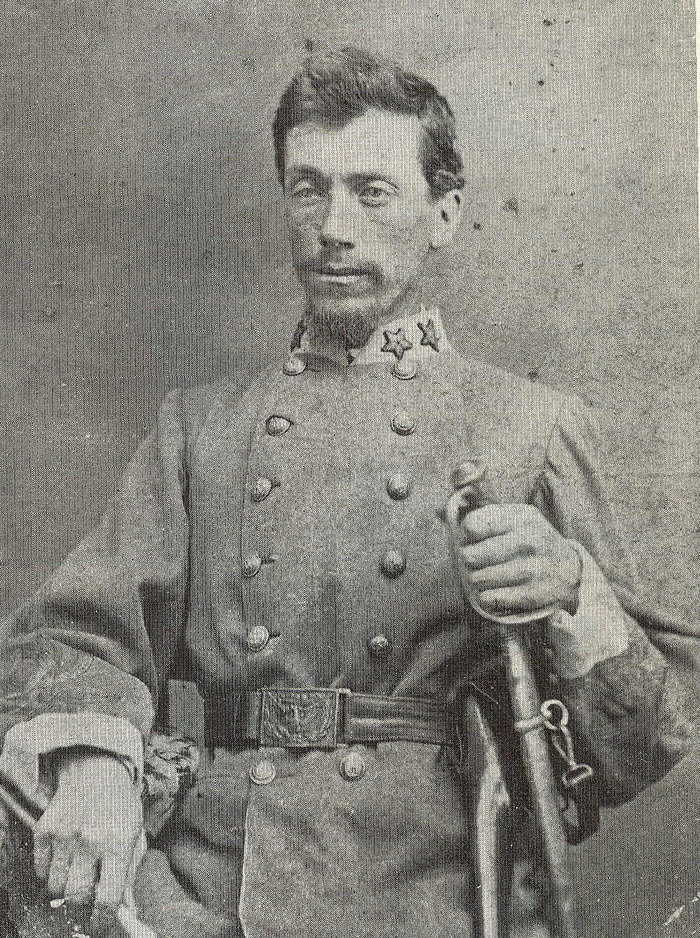
Opposite Kenly, the Confederate forces halted outside of Front Royal to prepare their assault. Among Jackson’s force was the 1st Maryland Infantry (CS), a regiment made up of men who fled south across the Potomac to join the rebels. Throughout the previous weeks, there had been a great deal of dissension within the ranks of the 1st Maryland (CS). Many of the men had enlisted for 12 months and their enlistments had expired, while others in the regiment had enlisted for the duration of the war. Conflict over the expired enlistments had led to open mutiny, with many men refusing to fight. Colonel Bradley Johnson, the commander of the mutinous Marylanders, saw an opportunity to rally his men for the coming fight.

Colonel Johnson rode before his discontented men and addressed them with an appeal to their honor:

You have heard this personal order from General Jackson and you are in a pretty condition to obey. You are the sole hope of Maryland. You carry with you her honor and her pride. Shame on you—shame on you. I shall return this order to General Jackson with the endorsement, ‘The First Maryland refuses to the face the enemy’, for I will not trust the honor of the glorious old State to discontented, dissatisfied men. I won’t lead me who have no heart. Every man who is discontented must fall out of ranks—step to the rear and march with the guard. If I can get ten good men, I’ll take the Maryland colors with them and will stand for home and honor; but never again call yourselves Marylanders!

Colonel Bradley Johnson, who rallied his 1st Maryland Infantry (CS) for the attack on Front Royal.

Johnson’s appeal was met with wild enthusiasm, and the rebel Marylanders formed and moved to the front. They would be the vanguard of the Confederate assault, at the head of over 3,000 veteran troops ready to capture Front Royal. Johnson’s Marylanders were particularly excited to test their mettle against their Unionist counterparts in Kenly’s regiment.

As the Confederates advanced into Front Royal, they quickly drove the Federal pickets through the streets of town. According to one account, one young lady of the town called to the advancing Confederates “Go it, boys! Maryland, whip Maryland!” Kenly’s position on Richards’ Hill held for some time, but he was gradually forced to abandon the hill when Confederate cavalry slipped around behind him and threatened to cut him off. The 1st Maryland (US) crossed the South and North Branches, and attempted to burn the bridges as they went. Sergeant William Taylor of Baltimore received his first Medal of Honor citation for his role in firing the bridges that afternoon.

Colonel Kenly and his men took up another defensive position north of town on Guard Hill, as the rebels attempted to put out the burning bridges. It was clear to the veteran commander that his garrison was hopelessly outnumbered, and soon the Confederates were advancing once again.

Kenly found his position at Guard Hill was now under threat of being over run, as Confederate cavalry again pressed around his flanks. The Union Marylanders fell back once again, heading north up the pike towards Winchester (modern Rt. 522). They turned to make another stand near the Thomas McKay house, where high ground straddled both sides of the road. Unfortunately for Kenly the strength of the position was more than offset by the sheer numbers of the Confederate forces. Once again, the rebels pushed around the Federals, and Colonel Kenly desperately tried to hold the line. In the ensuing struggle, Colonel Kenly fell with a severe wound as he was extolling his men to “Rally round the flag!” Chaos ensued, and when the firing finally stopped nearly 700 Union troops were captured.

The McKay House, also known as Fairview, where the Kenly’s Marylanders made their final stand.

Participants in the battle recorded the unusual nature of the aftermath. Kenly’s 1st Maryland (US) was largely raised in the city of Baltimore, and Johnson’s 1st Maryland (CS) included a large number of Baltimore men as well. Many had come from the same neighborhoods and even the same families. The oft repeated phrase of “brother against brother” was literally true that day as Confederate officer William Goldsboro was surprised to see his brother, Charles, among the Union prisoners. The rebel Goldsboro later recalled how “nearly all recognized old friends and acquaintances, whom they greeted cordially, and divided with them the rations which had just changed hands.”

The fall of Front Royal opened the road for Jackson’s advance further down the Valley. In the next few weeks he was able to drive most of the forces opposing him back across the Potomac and even threaten the Federal position at Harper’s Ferry. His campaign in the Valley solidified his reputation as one on the Confederacy’s most active and enterprising officers. For the men of the two 1st Maryland Infantry Regiments, the Battle of Front Royal was always remembered for the intimate connection between the combatants. Today that legacy is remembered by the 115th Infantry Regiment of the Maryland National Guard, who carry the motto “Rally Round the Flag” in honor of the orders shouted by Colonel Kenly at Front Royal.

The unit insignia of the 115th Infantry Regiment, MD National Guard. The blue and gray and Kenly’s quote are reminders of the Civil War lineage of the unit.

“I Am Now No Longer Your Commander”, The Disbandment of the 43rd VA

Reminiscing about his time with Mosby’s Partisan Rangers, John Munson recalled that after March 1863’s successful kidnapping of Gen. Edwin Stoughton, “To get his men out of the trouble into which it had been so easy to get, was now Mosby’s care, for he always looked after that part of his exploits.” In two years of operation, including 1 year, 9 months, and eleven days as the official commander of the 43rd Battalion of Virginia Cavalry, John Singleton Mosby got his men into and out of plenty of trouble. On April 21, 1865 he performed his last duty to lead the men in his command from harm, which was to disband the unit and give Mosby’s Rangers a free choice to surrender to the United States.

The decision to disband did not come lightly. On the same day that General Lee surrendered at Appomattox Courthouse, a newly-formed company of Rangers was on its first raid against Union supply lines. Mosby himself first learned of the surrender through a copy of the Baltimore American, and his first correspondent about surrender was from United States Major General Winfield Hancock, stationed in Winchester. On April 11th he relayed a message from Secretary of War Edwin Stanton that cavalrymen of the 43rd were to be offered the same generous terms of surrender as the men in the Army of Northern Virginia, with one caveat: “The guerrilla chief Mosby will not be paroled.”

John Singleton Mosby, photographed shortly after his promotion to Colonel, 1865

John Mosby stalled for time, agreeing to an armistice but no surrender until he had clearer instructions from General Lee, via scout Channing Smith. Lee’s weary advice to Smith and the 43rd was to “go home . . and help build up the shattered fortunes of our old state.” A dutiful (if irregular) soldier, Mosby prepared to do just that when he rode into Millwood on April 20th. Tensions were high in Clarke’s Hotel, where nearly forty men, both Union and Confederate, crammed into the parlor. Before Mosby could make a decision to sign the terms, a young and uninvited ranger burst into the room, declaring that the Yankees had a thousand cavalrymen stashed in the woods ready to capture them. Mosby stood, ready for any action but with his characteristic steely nerve, and led his men out of the Hotel and eastward back over the Blue Ridge. The phantom Yankees never appeared.

Clarke’s Hotel, Millwood, VA

The Colonel knew his time was up. He had been given a chance to surrender his command and the offer wasn’t likely to come again unless forced on the end of a bayonet. Thinking again of the men in his command and not his own status as an outlaw, he penned a final farewell to those who had fought with him in numerous hair raising adventures. About 200 riders of the 43rd Virginia gathered just outside of Salem Virginia on April 21, 1865. Mosby did not recite his farewell aloud, instead company officers read the letter to the men assembled. Many, including the Colonel, wept openly at his words:

Soldiers! I have summoned you together for the last time. The vision we have cherished of a free and independent country, has vanished, and that country, is now in the spoil of a conqueror. I disband your organization in preference to surrendering it to our enemies. I am now no longer your commander. After association of more than two eventful years, I part from you with a just pride, in the fame of your achievements, and grateful recollections of your generous kindness to myself. And now at this moment of bidding you a final adieu accept the assurance of my unchanging confidence and regard. Farewell.

Jno. S. Mosby, Colonel
Glen Welby, the Confederate safehouse where Mosby penned his farewell message to the 43rd battalion.

While most of his Rangers surrendered and paroled, Mosby first intended to join General Johnston before learning of his surrender to Sherman. After that point he lived with relatives, living under the radar of the $5,000 bounty on his head. On June 13, with assurances from his brother William, he tried to surrender in Lynchburg, Virginia, but was denied parole there. Finally, with the help of a personal plea from his wife Pauline Mosby, the Colonel was granted parole from Ulysses S. Grant. The Gray Ghost never regretted his actions in the Civil War, nor did he regret the tortuous decision to disband the 43rd VA. He went on to serve his state and country as a consul in Hong Kong, an agent in the General Land Office, and as an assistant attorney in the Department of Justice.

Want to learn more about John Mosby at the end of the Civil War? Want to see the sites for yourself? Enjoy this Driving Tour, or visit the Mosby Heritage Area Association website for more!

Reading Questions: In your own words, please answer the following questions.

  1. Why did John Mosby stall for more time when General Hancock asked for his surrender?
  2. In what ways did John Mosby demonstrate leadership? Give at least two examples.
  3. Who is a leader that you respect? What makes him or her a good leader?

First Contact at Gettysburg

We can’t say with certainty how many men from the Heritage Area were present at the Battle of Gettysburg, but it is undoubtedly in the hundreds. Men from the region filled the ranks of the 8th and 49th Virginia Infantry Regiments, which both saw heavy fighting during the three day battle. Others served in the 35th Battalion of Virginia Cavalry or the 6th Virginia Cavalry, guarding Lee’s flanks and protecting his army’s retreat. Untold others served as individuals or small groups scattered throughout the Confederate Army. On the other side, several dozen men from Loudoun and the neighboring counties were serving in the 1st Maryland Potomac Home Brigade Infantry, Cole’s Maryland Cavalry, and there are undoubtedly more in other regiments that have yet to be uncovered. The presence of men from the Heritage Area fighting on opposite sides of the battle provides us with personal stories of communities that were divided during the war. It also calls attention to a little-known prelude to the battle that saw two Loudoun County residents facing off against one another.

Luther Slater was born near Lovettsville in 1841. As a young man he worked towards a future as a clergyman, studying first at Roanoke College and then at the Preparatory Department of Pennsylvania College at Gettysburg (now Gettysburg College). His intention was to enroll at the now well known Lutheran Seminary there, but the coming of the Civil War interrupted his plans and set him on a new path.

A photo of Luther Slater taken later in life (FindAGrave/Edward Spannus).
The Lutheran Seminary in Gettysburg, where Slater planned to attend. The building now houses the fantastic Seminary Ridge Museum.

Slater returned home to Loudoun County, and in late June, 1862, he was one of dozens of local unionists who enlisted in a newly formed cavalry unit known as the Loudoun Rangers. Although only 21 years old at the time, he was elected 1st Lieutenant of Company A. The company was still assembling and new recruits were training two months later, when Slater and his command would endure their baptism of fire.

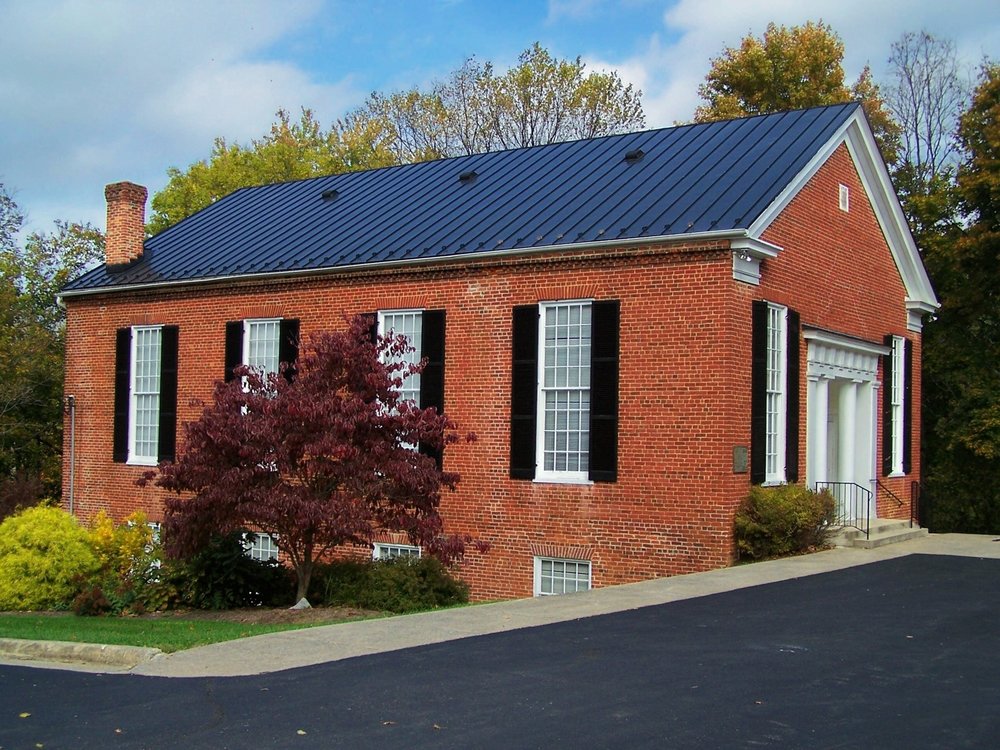
Early on the morning of August 27th, 1862 Slater and around 20 of his men were surprised and surrounded in the Waterford Baptist Church by Elijah White’s 35th Battalion of Virginia Cavalry. In the ensuing firefight that lasted several hours, Slater was wounded severely – shot in the head, shoulder, arm, and hand. When the outnumbered Rangers finally surrendered to White’s force, the Confederate commander is said to have told Slater “I am sorry to see you so dangerously wounded, Lieutenant.”

Maryland born Elijah V. White commanded the 35th Battalion of Virginia Cavalry, and was a frequent opponent of Slater and the Loudoun Rangers.
The Waterford Baptist Church, site of the August 1862 fight and Luther Slater’s terrible wounding.

With his life in the balance, the badly wounded Lieutenant was sent away to recover among friends that he had met while studying in Gettysburg. He became particularly attached to one of his caregivers, Mollie Yount. Luther remained in Gettysburg for several months, before returning to the army as a provost guard at Point of Rocks. It wasn’t a combat role, but his arm injury caused him repeated problems, which led to his resignation from the army in February, 1863. He returned to Gettysburg (and to Mollie), where it was hoped he would be far from the seat of the war.

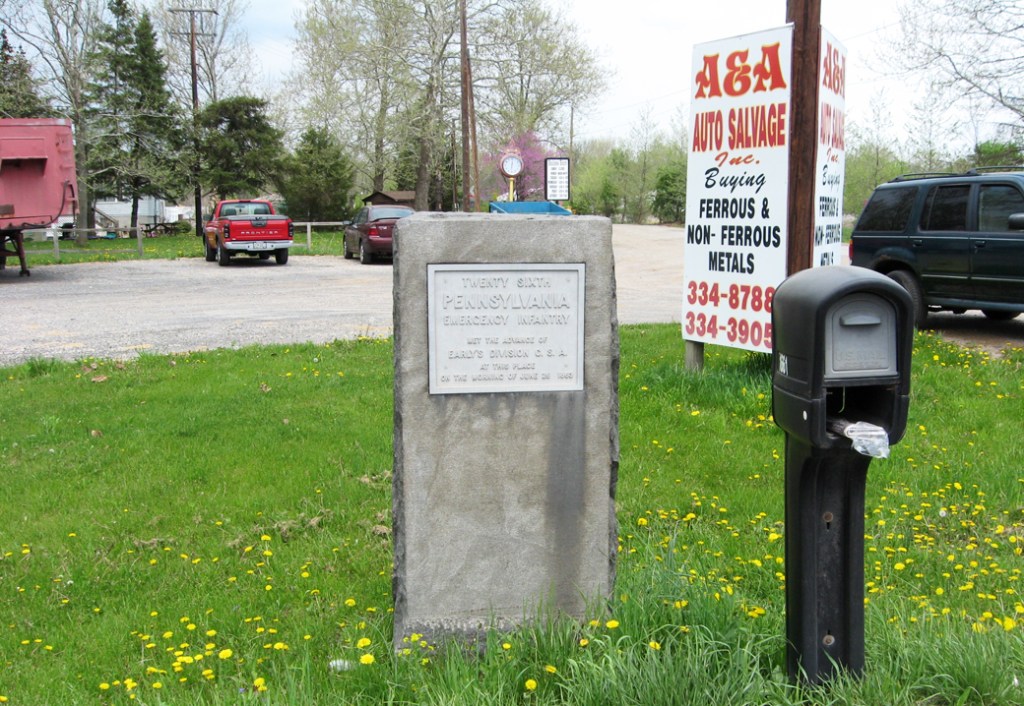
That summer, the war came to Luther Slater as the Army of Northern Virginia marched into Pennsylvania. The state’s governor called for emergency militias to be raised in an effort to slow the Confederate advance. Not one to forgo his duty, Luther Slater volunteered, despite his old wounds. The young Lieutenant, arm still in a sling, was soon at the head of a company of Gettysburg college and seminary students that became part of the 26th Pennsylvania Emergency Militia. On the morning of June 26th, this militia regiment, along with some local farmers mounted as cavalry, stood along the banks of Marsh Creek, just west of Gettysburg. Bearing down on them was a strong force of veteran Confederate infantry, with the horsemen of Elijah White’s 35th Battalion leading the way. The Confederate cavalry “came with barbarian yells and smoking pistols” and easily brushed aside the inexperienced militia, capturing many and routing the rest. Later that same day the militia attempted to regroup north of town, but was again driven off.

The Skirmish at Marsh Creek (Battlefield Trust)

Slater survived his second brush with Elijah White, and remained with the militia for the next month. He was detailed to the signal corps, and according to some sources he also served in the hospital corps as well. In November 1864, he married Mollie, and at the end of the war he and his bride moved back to Lovettsville. From there he had a distinguished career in politics and civil service – first as a constable and postmaster in Loudoun County, then as a 40-year career employee with the Federal government. His greatest contribution was with the Record and Pension Office, where he assisted with the organization of military records following the war. He was also a founder of the Washington, DC chapter of the Military Order of the Loyal Legion of the United States.

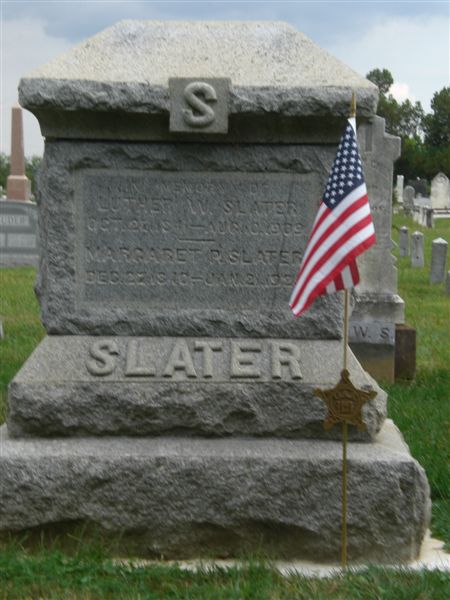
Slater’s gravestone in Lovettsville’s Union Cemetery (FindAGrave/Edward Spannus)

The story of Luther Slater is one of a man committed to service, whether it was to his faith, his community, or his nation. It’s also an example of two men from the same community – Elijah White and Luther Slater – who happened to face off against one another on the eve of the greatest battle of the Civil War.

For more information on Luther Slater, visit the Lovettsville Historical Society!

Class Activity: In your own words, please answer the following questions:

  1. What military units did Luther Slater serve in during the Civil War? How would you describe his military career?
  2. Name three ways that Luther Slater served the public.
  3. Using what you can research about the Civil War in the Heritage Area, why do you think Elijah White and Luther Slater chose to fight on different sides of the war? Visit the Mosby Heritage Area, the Loudoun Museum, and Loudoun History for more information.

John Lederer’s Zynodoa

In 1607 the Virginia Company claimed a vast new British colony in the New World; Virginia. Shortly afterwards an official writ declared that Virginia included land between the 34th and 39th parallels, from sea to sea. While the territory was undeniably huge, it was impossible to tell just how huge it was because no one could find a passage to the western sea. European powers were eager to find such a passage, as they believed that India and China lay a short distance from the California coast. However, British colonists had their hands full in the first few decades building forts, raising crops of tobacco, and alternately making war and peace with nearby indigenous groups. Moreover, few possessed the bravery and know-how to traverse the wide Piedmont and ascend the mountain range beyond.

This 1670 map by Augustin Herrman shows English settlement only extended as far westward as the fall line of most major rivers.

As time went on, Governor William Berkeley became increasingly interested in what lay beyond the tidewater. He unsuccessfully petitioned Parliament for 200 armed men to be sent westward in pursuit of California and the Indian Ocean, and in 1669 settled on employing a much smaller band of explorers. At their head was 25 year old John Lederer, a German physician. In contrast to his English counterparts, Lederer kept a careful account of the ventures undertaken in March 1669, and May and August 1670. He wrote in Latin about the geography, fauna, and indigenous populations of central and south-western Virginia, heading from the fall lines of the York and James rivers into the colony of (North) Carolina. His aim was to discover a place the Indians called Sara, where the mountains were low and easy to cross. Lederer’s first travels each lasted for weeks, and included hair-raising incidents like witnessing the murder of two native ambassadors to the Akenatzy (or Occaneechi) king, and bartering his gun and ammunition for his life from the Tuscarora. Still, Lederer wrote that by and large, American Indians lived in peaceful and prosperous settlements, and that many of their elders spoke with intelligence and wisdom likened to contemporary European politicians. But by summer 1670 the political tide had turned against the young German, so his foray from the Rappahannock river to the Appalachians would be his last.

Map of John Lederer’s adventures. His journey to the lower Shenandoah Valley in August 1670 is shown at the far right.

This time the route veered North rather than South. There was rumored to be a gap in the mountains in Northern Virginia known only as Zynodoa. Lederer set out in late August with Colonel John Catlett and a handful of both European and American Indian guides. Catlett was a natural choice, being the sheriff of Rappahannock County (now Essex County) and the owner of 200 acres near the fall line of the Rappahannock River. They set out from Catlett’s neighbor Robert Taliaferro’s property near present-day Fredericksburg and followed the Rappahannock’s northwesterly direction for two days. Those familiar with Northern Virginia’s hills, fields, and streams will recognize Lederer’s description:

“These Savanae are low grounds at the foot of the Apalataeans. . . [and] their verdure is wonderful pleasant to the eye, especially of such as having travelled through the shade of the vast forest, come out of a melancholy darkness of a sudden, into a clear and open skie. To heighten the beauty of these parts, the first springs of most of those great rivers which run into the Atlantick ocean, or Cheseapeack Bay, do here break out, and in various branches interlace the flowry meads, whose luxurious herbage invites numerous herds of red deer. . . to feed.”

John Lederer, 1670
Detail of Lederer’s map to show his journey East to West along the Rappahannock. Robert Taliaferro’s property near present-day Fredericksburg is at the far right.

On the twenty-sixth of August the party came to the foot of the Blue Ridge. Finding no way up for the horses, Lederer, Catlett, and a few other individuals scaled the mountain and named it for the king. This point is believed to be at Linden, Virginia, where a marker declares the 1669 discovery of the Shenandoah Valley by a European explorer. Lederer wrote that the air was thick and cold on the mountain, and it took most of the day to reach the summit. Here, they were hoping to see what had eluded Europeans for so long: a glimpse of an easy pass through the mountains, and maybe even a glimmer of a sea beyond.

Looking across the Blue Ridge, Photo by Mike Chirieleison

They were not so lucky, but doubtless the view they saw was a beautiful one. On reaching the summit of their little mountain, Lederer and Catlett saw . . . more mountains. Many more mountains, much taller than the one they now occupied, arranged in a ridge some 50 leagues away, by Colonel Catlett’s estimation. There was no sign of Zynodoa, a gateway through the mountain range. Deflated, the party returned to the Tidewater. Here we may well have lost Lederer’s account of his travels, as Governor Berkeley was no longer interested in making them public. In fact, Lederer himself had to move to Maryland as he had few friends among Virginia society. It’s here that his record was translated and published in 1772 by Maryland Governor William Talbot, who no doubt still hoped to discover Zynodoa and the riches of the West. Within a century Zynodoa and the valley would be called by their modern name, Shenandoah.