15,000 years ago, the northern Virginia Piedmont looked drastically different than it does today. As the ice sheets retreated northward, the climate was cooler and dryer than today. Coniferous trees predominated, intermingled with stands of oaks and chestnuts and small patches of open grassland. The deer that are so common today mingled with species that have long disappeared from Virginia, including bison, elk, and even mastodon. Humans also began to settle in the region, following these big game animals and searching for natural resources. Archaeologists refer to these people as the Paleoindians, and they are the precursors of today’s Native Americans.
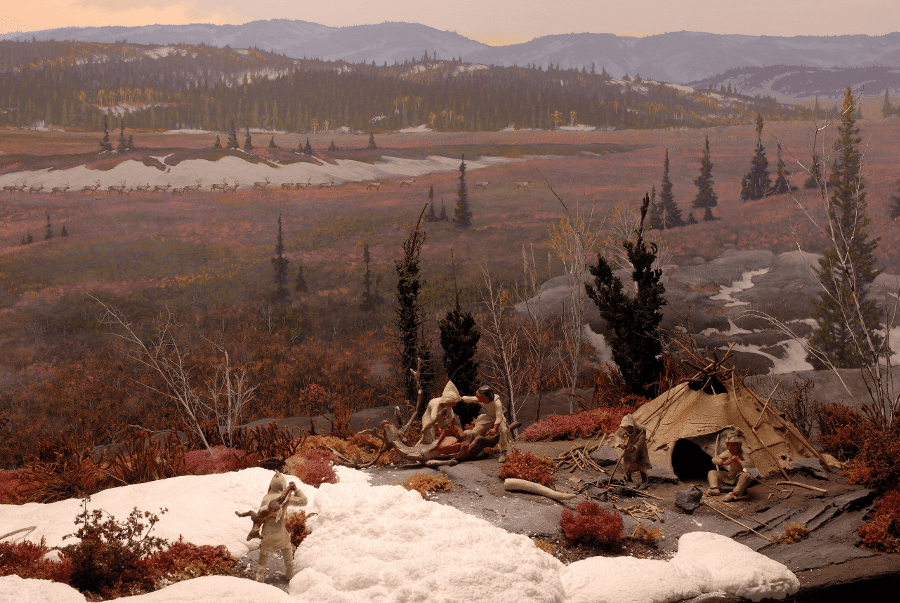
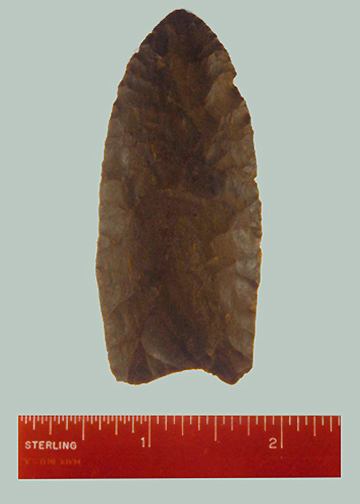
The Paleoindian period in Virginia, defined as roughly 16,000 to 8,000 BC, was characterized by nomadic family groups of 20 to 50 people. These groups moved seasonally to follow big game, and to collect nuts, fruits, and other foods. One of the most critical natural resources for the Paleoindian people was access to the appropriate stone to make tools. Axes, drills, knives, and spearpoints were knapped from stones that chipped easily and left sharp edges, like flint, jasper, and quartz. The definitive artifact of this period – the Clovis style spear point – is a great example of this technology. Although they are named after the town in New Mexico where they were first discovered, Clovis points are found all across North America, including many sites in Virginia.
The Paleoindians of Virginia lived long before writing, so everything we know about them comes from the professional excavation of archaeological sites. One of the most important complexes of Paleo sites ever discovered is located within the Mosby Heritage Area, along the banks of the Shenandoah in Warren County. The Thunderbird and Flint Run Archaeological Districts encompass a series of sites that date to the Paleoindian period, around 9000 BC. The discovery of these sites in the 1970s revolutionized much of what we knew about ancient Virginians.
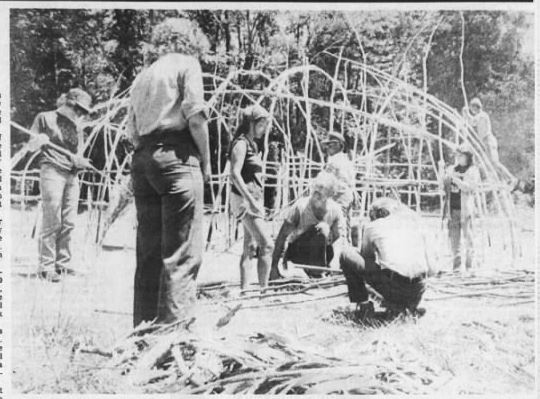
One of the most remarkable things about the sites in Warren County is the sheer number of artifacts recovered by archaeologists. Tens of thousands of Paleoindian tools and other artifacts made of stone and bone were found, which suggests that the sites were occupied on and off for thousands of years. These included tools for making stone blades, and tools for processing animals for food. It also suggests that people lived there in much larger groups than previously thought. It’s possible that several hundred, or even a few thousand people occupied these sites on a seasonal basis. This idea was reinforced by the discovery of several post-molds arranged in an oval shape in the soil. These impressions, left behind when posts rot away or are removed, appear to be the remains of a Paleoindian building. These stains in the soil are evidence of the oldest building in all of North America. So what brought so many people to Warren County back in 9000 BC? The answer is probably found in the rocks themselves. The area has deposits of jasper, a perfect material for producing stone tools, and separate areas of the Thunderbird site were used for quarrying material, making tools, and processing game.
A huge part of our mission at the Mosby Heritage Area Association is the preservation of historic resources. We tend to think of historic buildings, battlefields, and communities that we can see on the everyday landscape as our most important resources, but this also includes the sites beneath our feet. To help ensure that we can learn as much as we can from archaeological sites, the best thing to do is leave excavation to the professionals. Digging for artifacts without recording their proper context destroys valuable information about the past!
For more information on Paleoindians in Virginia, visit the Encyclopedia Virginia!
Class Activity: In your own words, please answer the following questions:
- How was the environment different in Virginia when the Paleoindians lived here?
- What drew Paleoindians to settle at the Thunderbird sites?
- List two clues that archaeologists discovered that helped them understand how Paleoindians lived.

 See it, Save it
Travis,
Thanks for this in-depth article and resource. I consider myself a student of the Virginia Indian Heritage Trail and this will add to my knowledge. We need more information and programs on our First Virginians in our region & Loudoun County. We can all get a better understanding of early lives in Virginia and the impact today when we include all the peoples in this important history…….living together as well as contributing to the building of Virginia. Least we forgot, Native Americans are still living here, this is still their home.
Alicia Cohen, Member
Black History Committee, Friends of the Thomas Balch Library
LikeLike